WILLOWBROOK COMMUNITY MONUMENTS & STORY CORRIDOR
Los Angeles, California
Client/Partner: Willowbrook Inclusion Network
Partner: LA Commons
Team: Reginald Johnson, Beth Peterson, Aroussiak Gabrielian, George Evans, Delaino Barris, Leslie Dinkin, Jonathan Tolentino, Kavya Gudihal, Daniela Velazco, Shuyi Zhang, Willowbrook Youth Artists, USC MLA+U Program/School of Architecture
Funder: USC Arts in Action
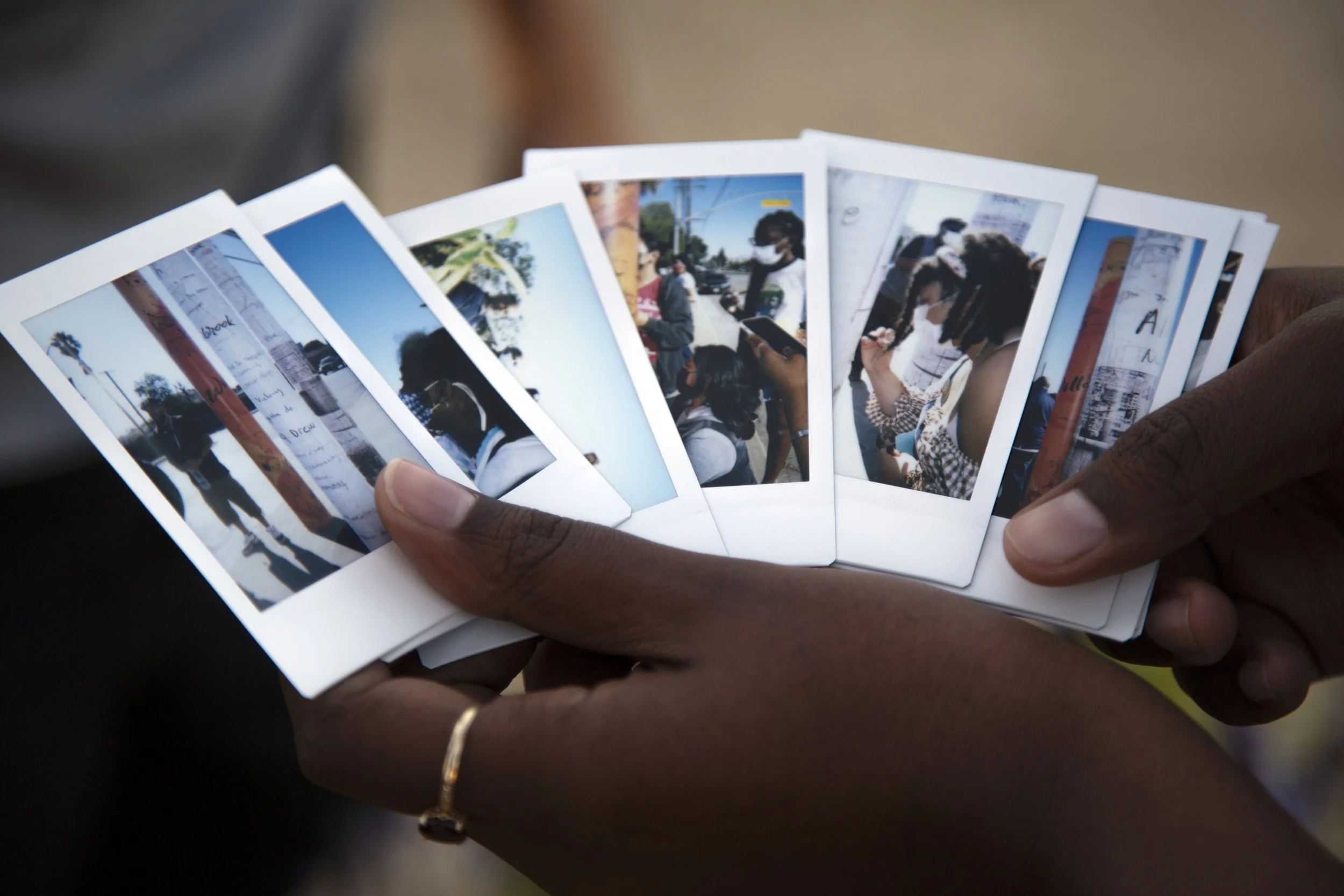
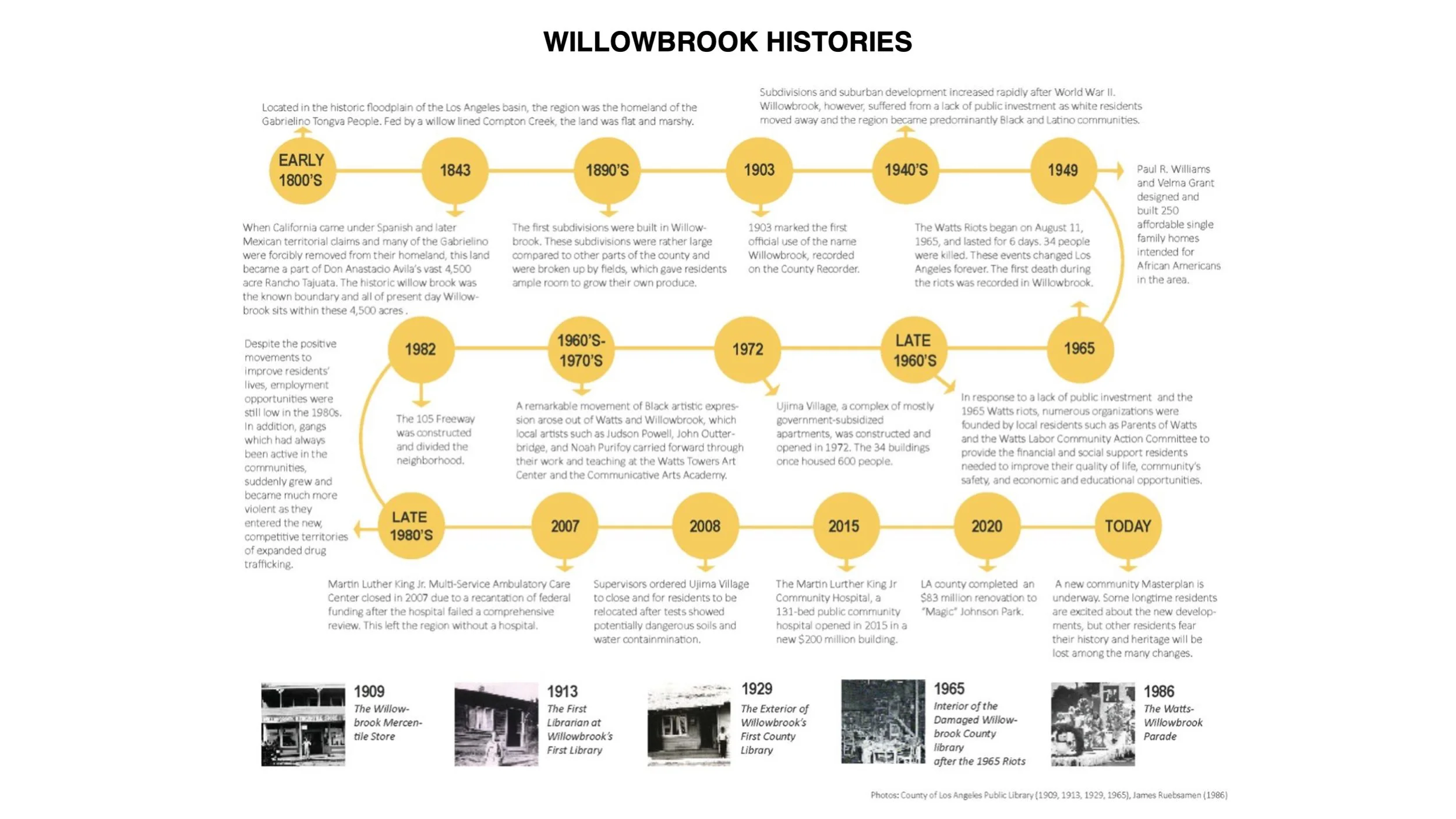
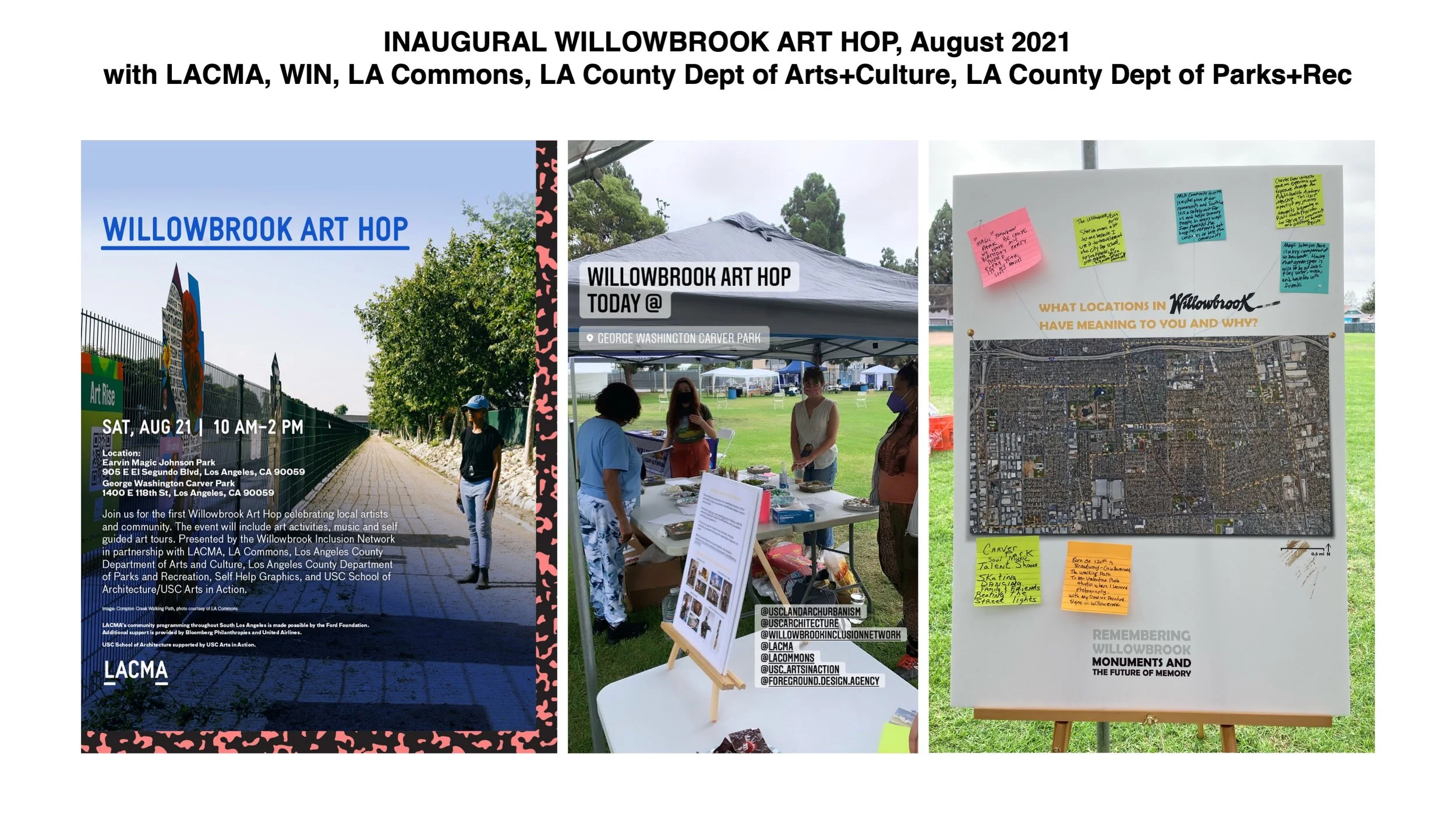
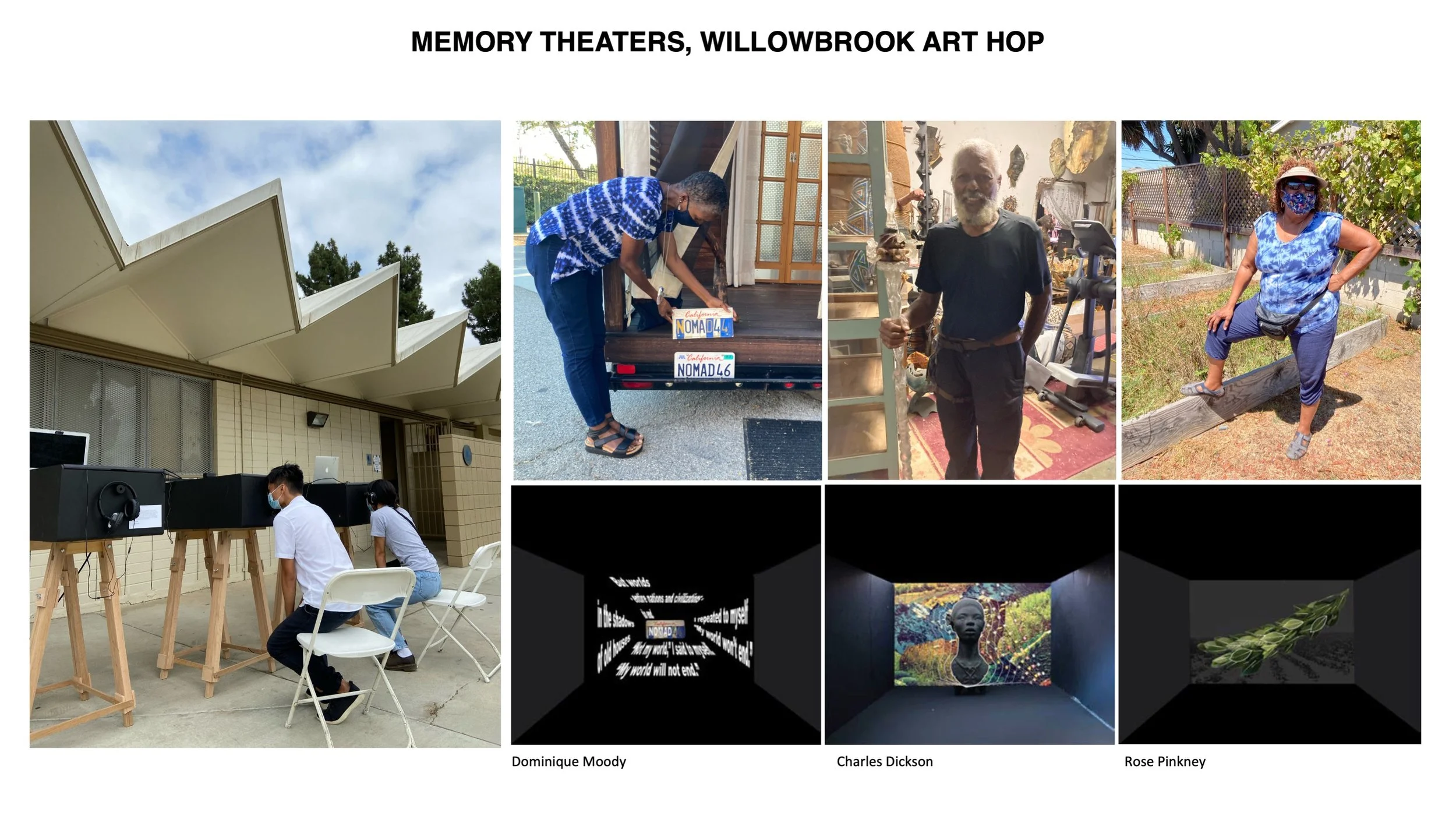
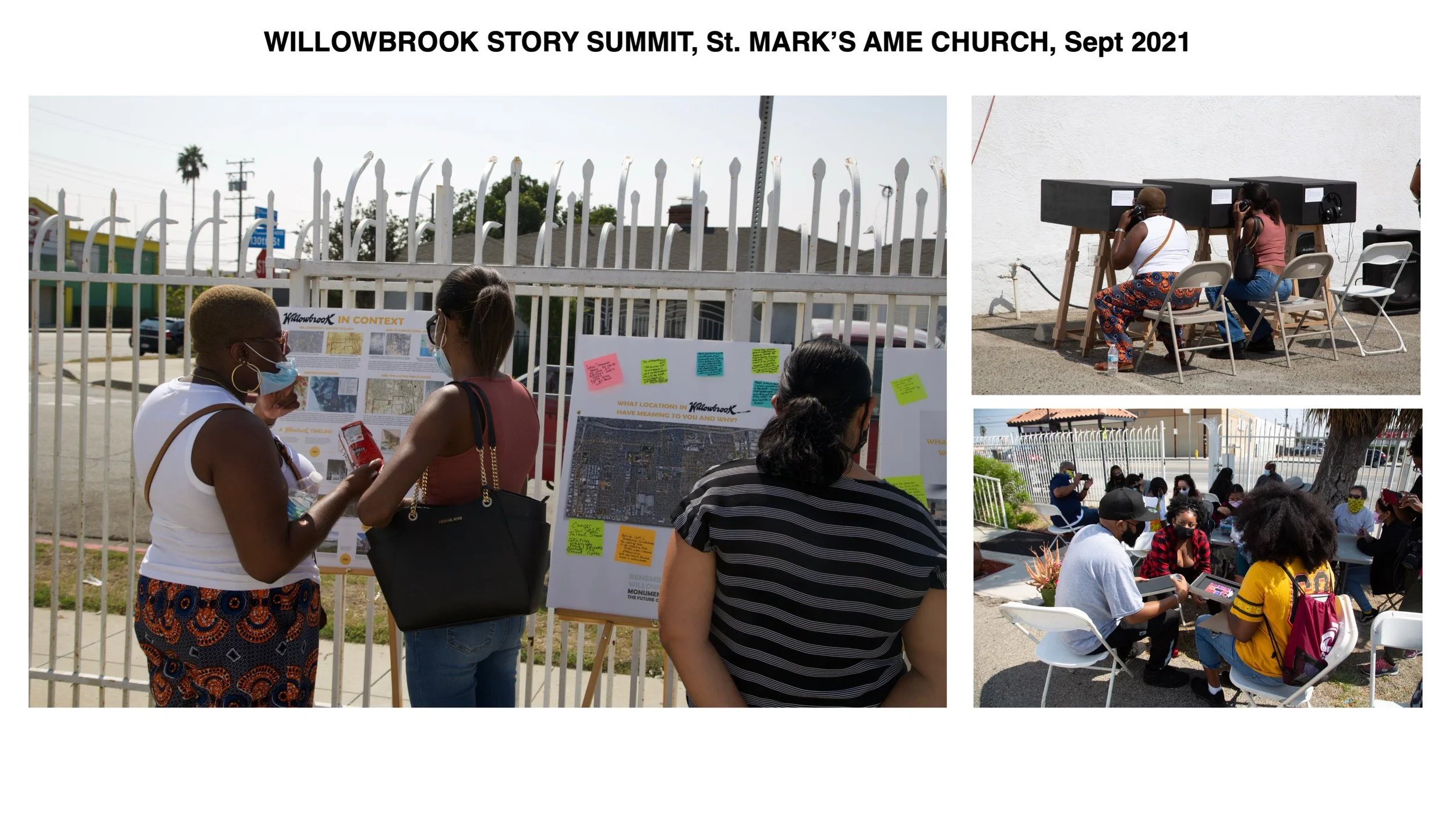
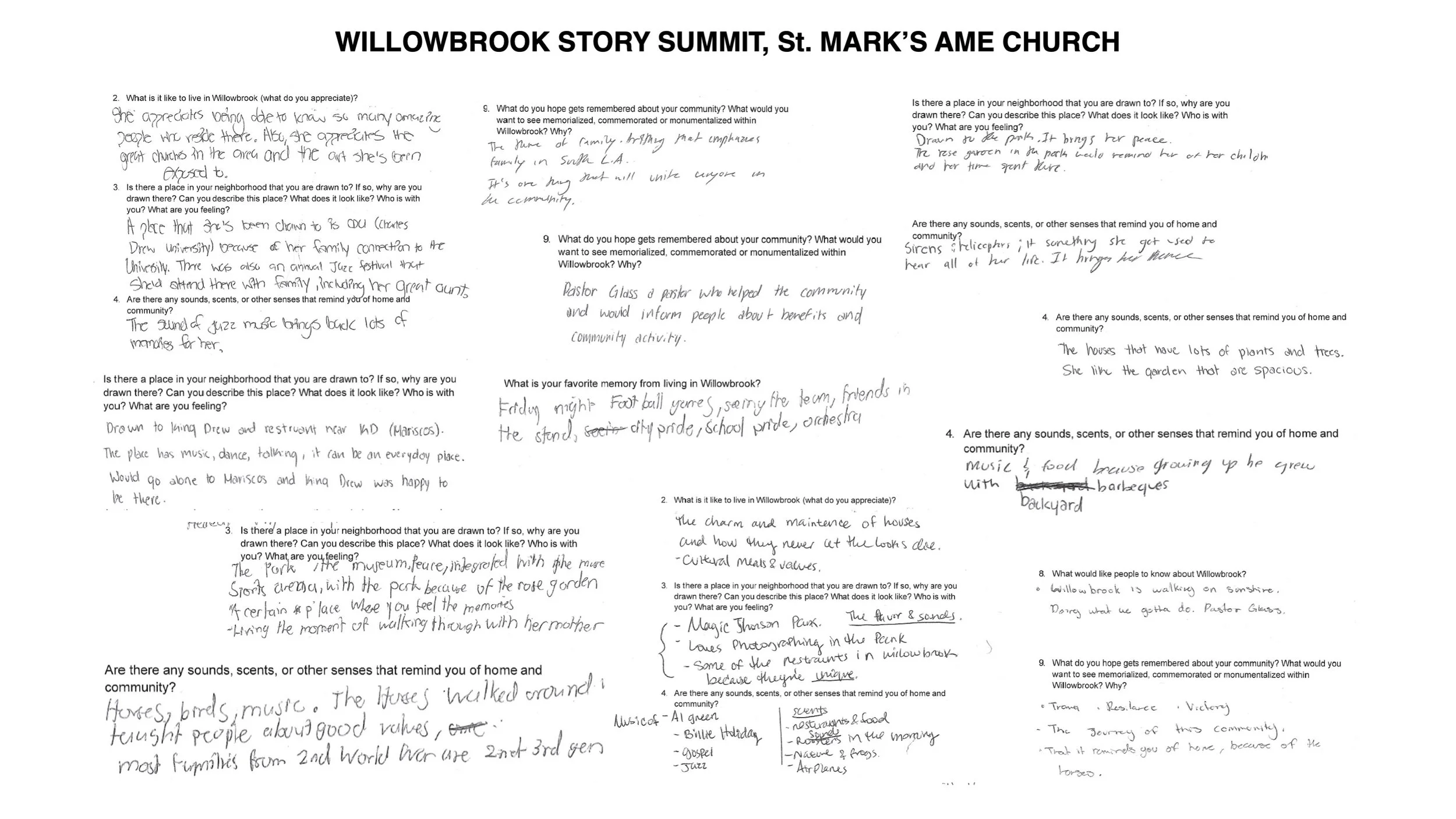
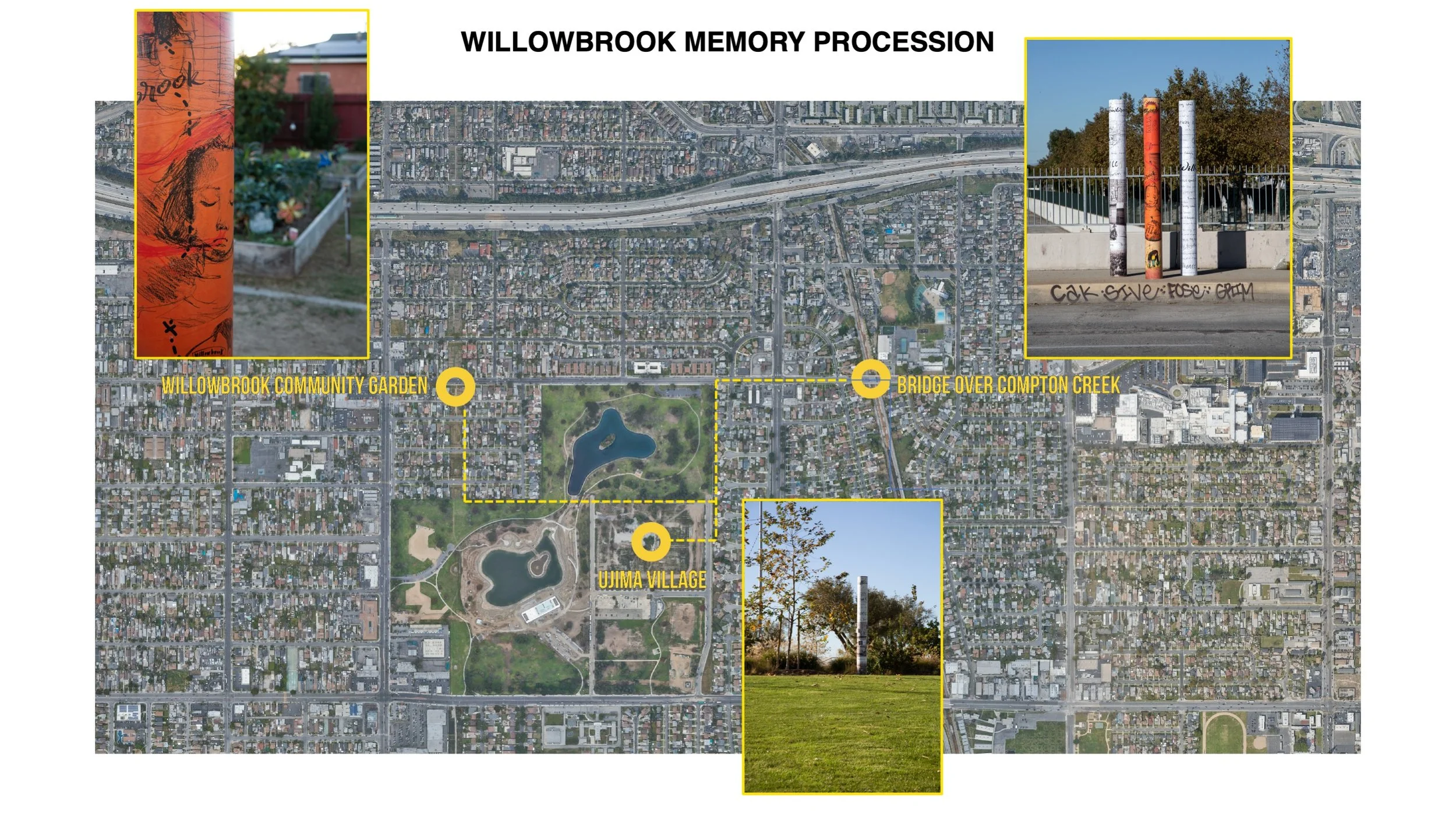
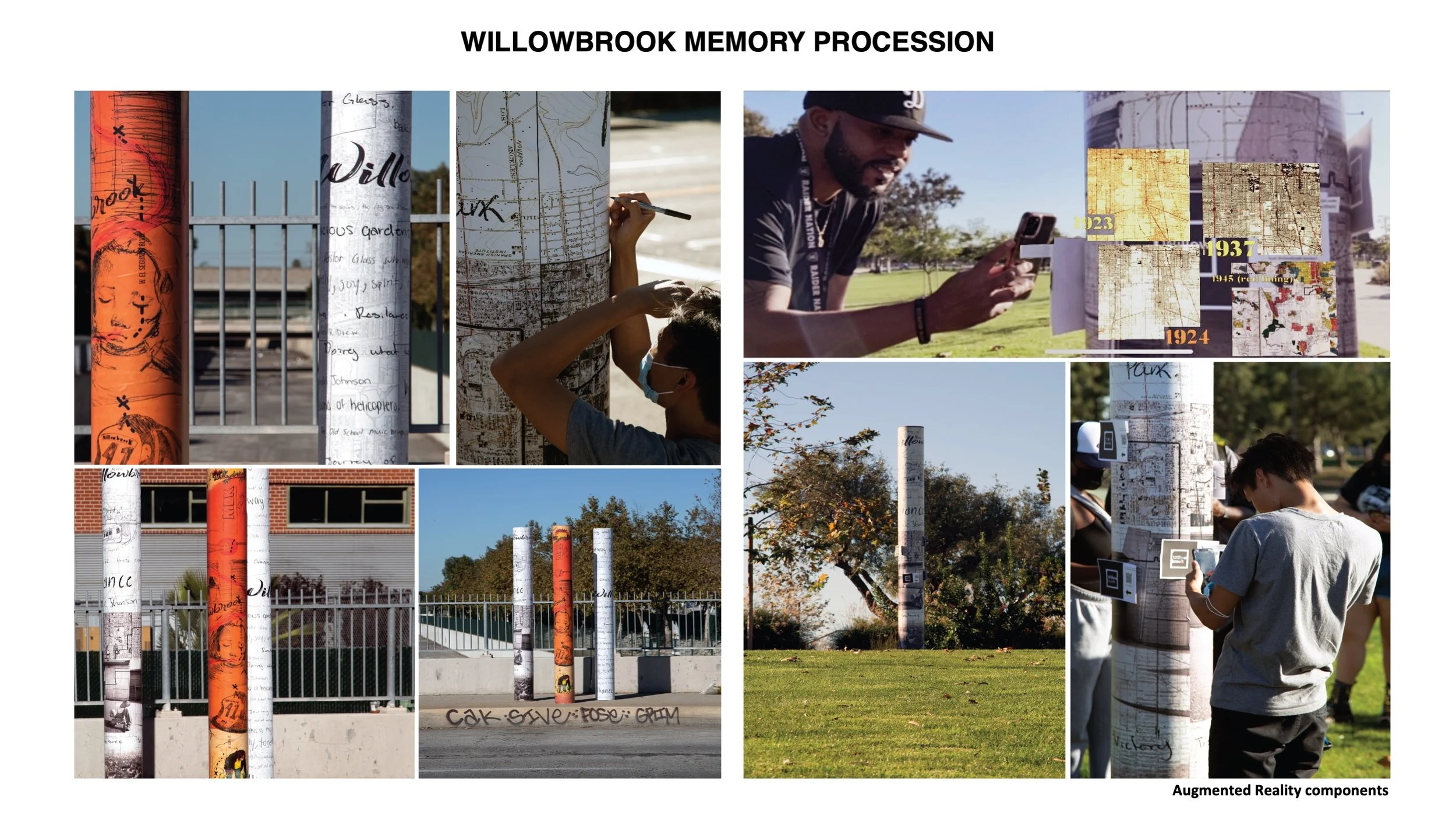
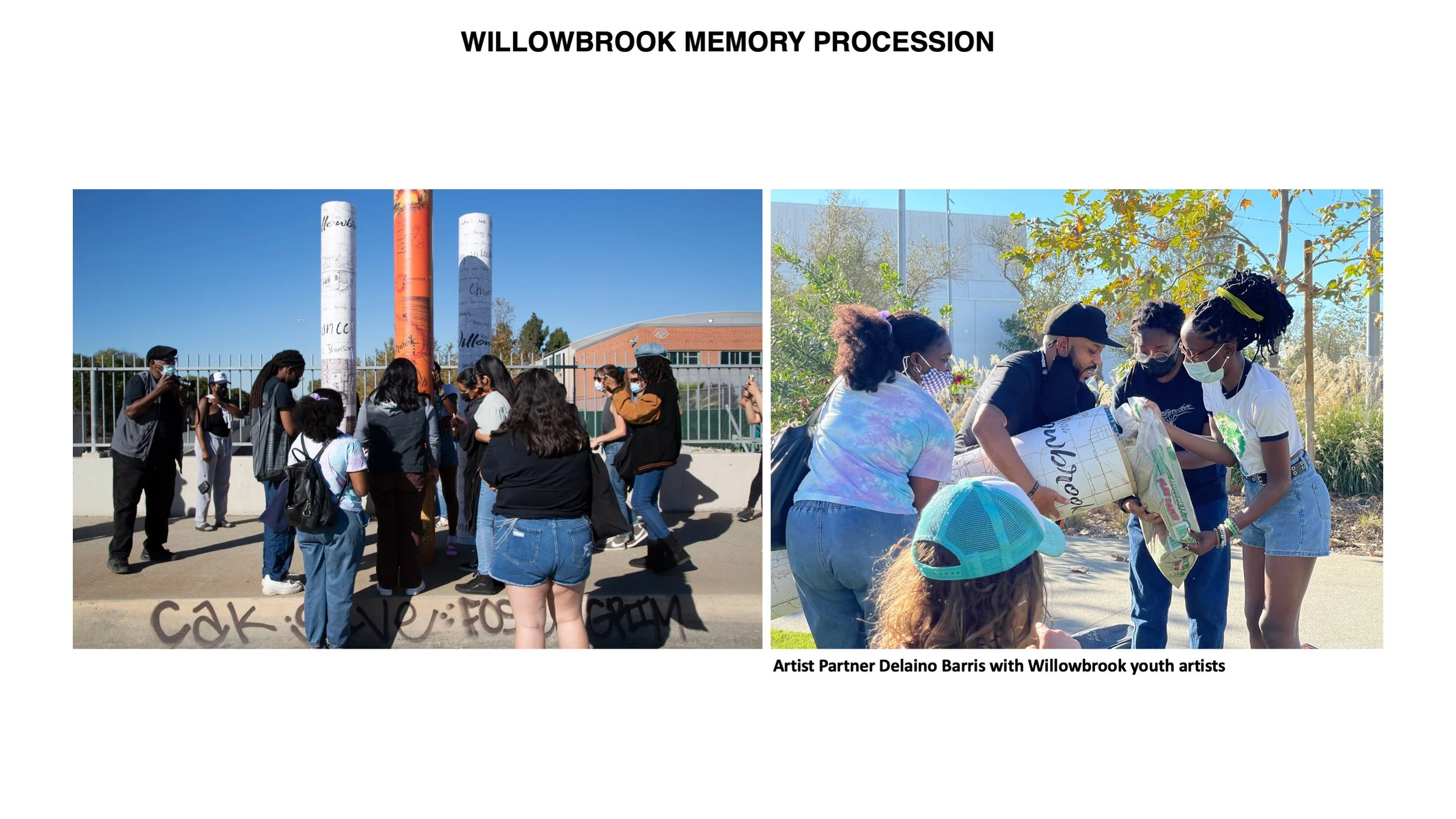
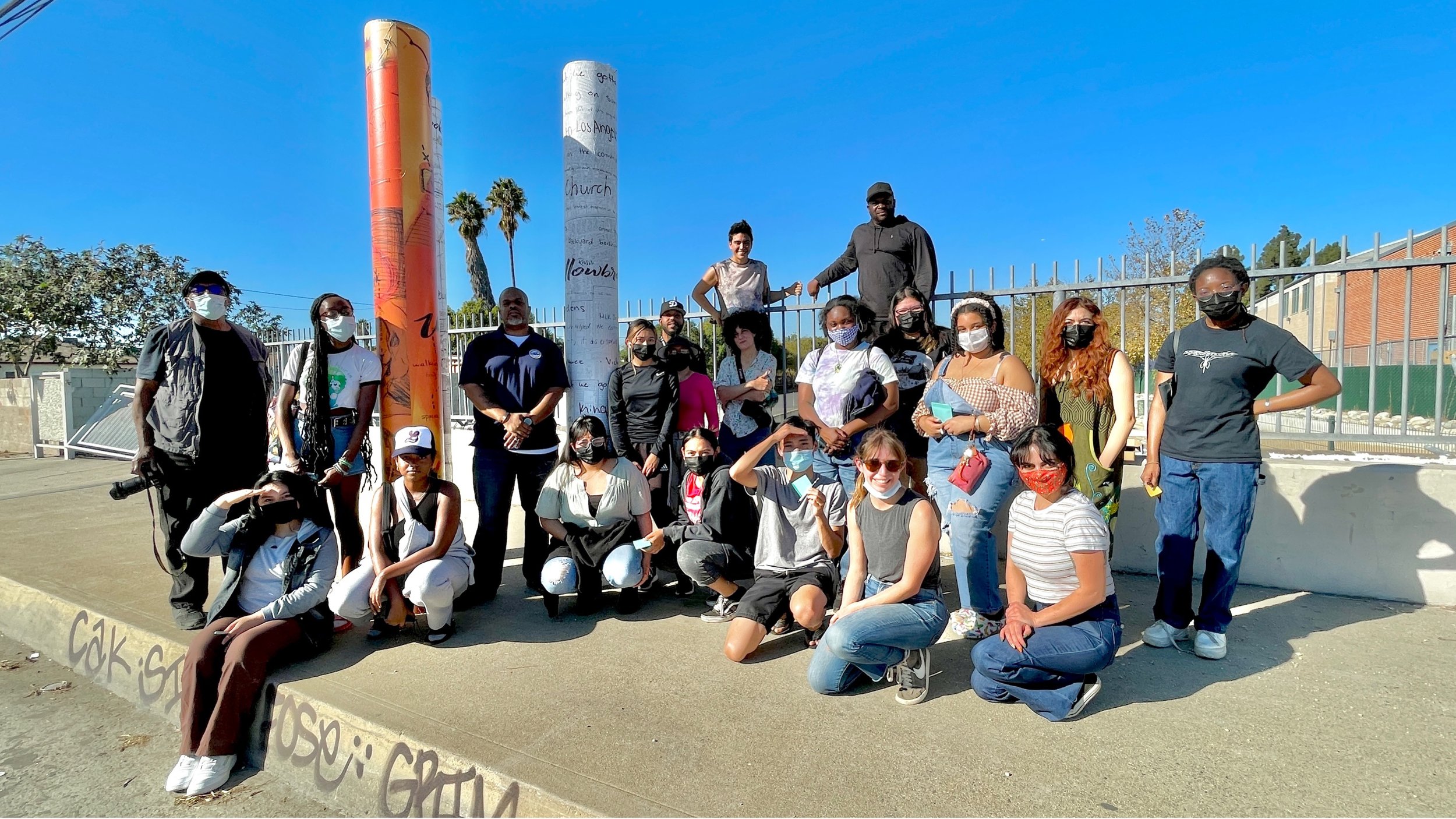
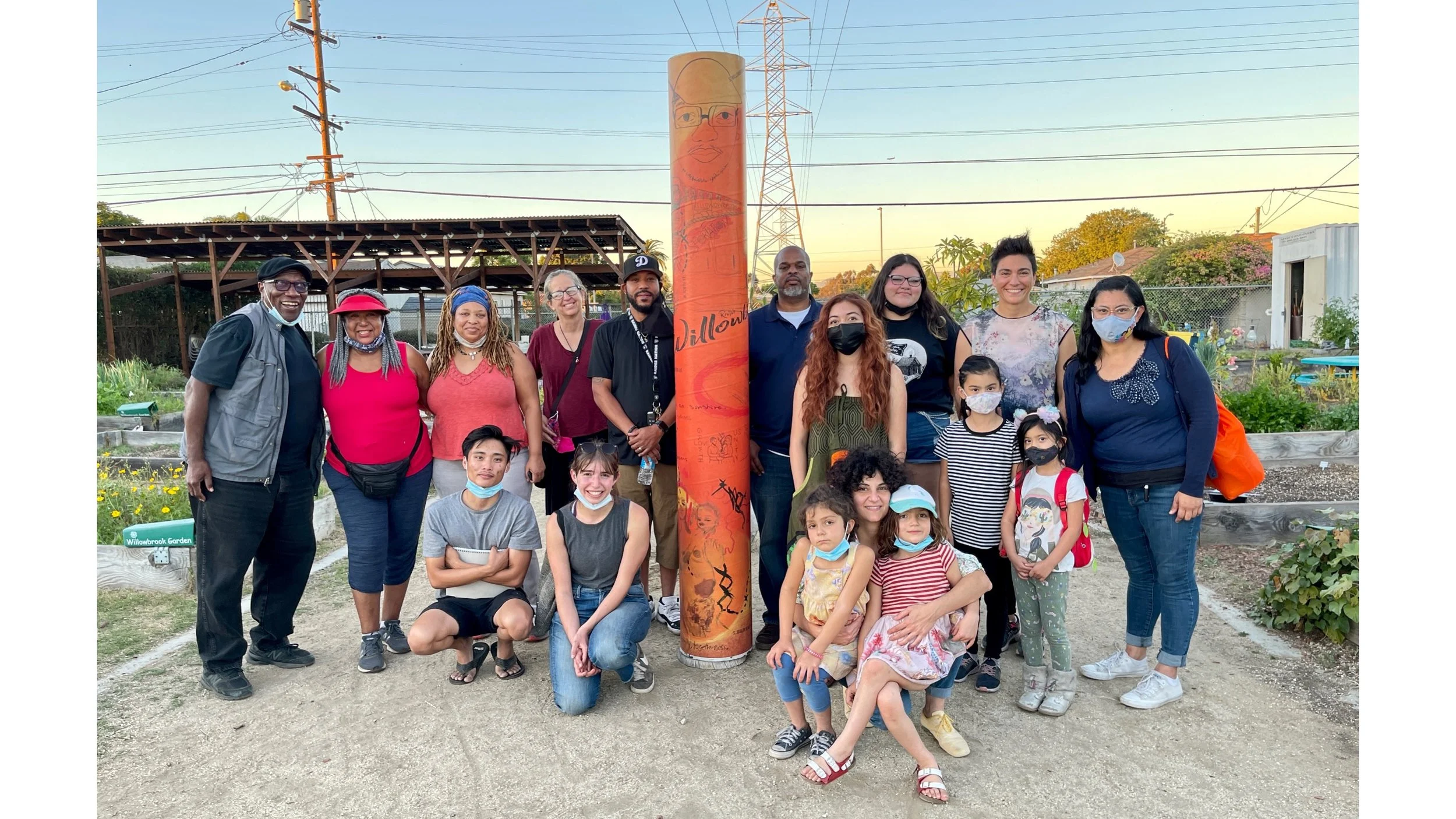
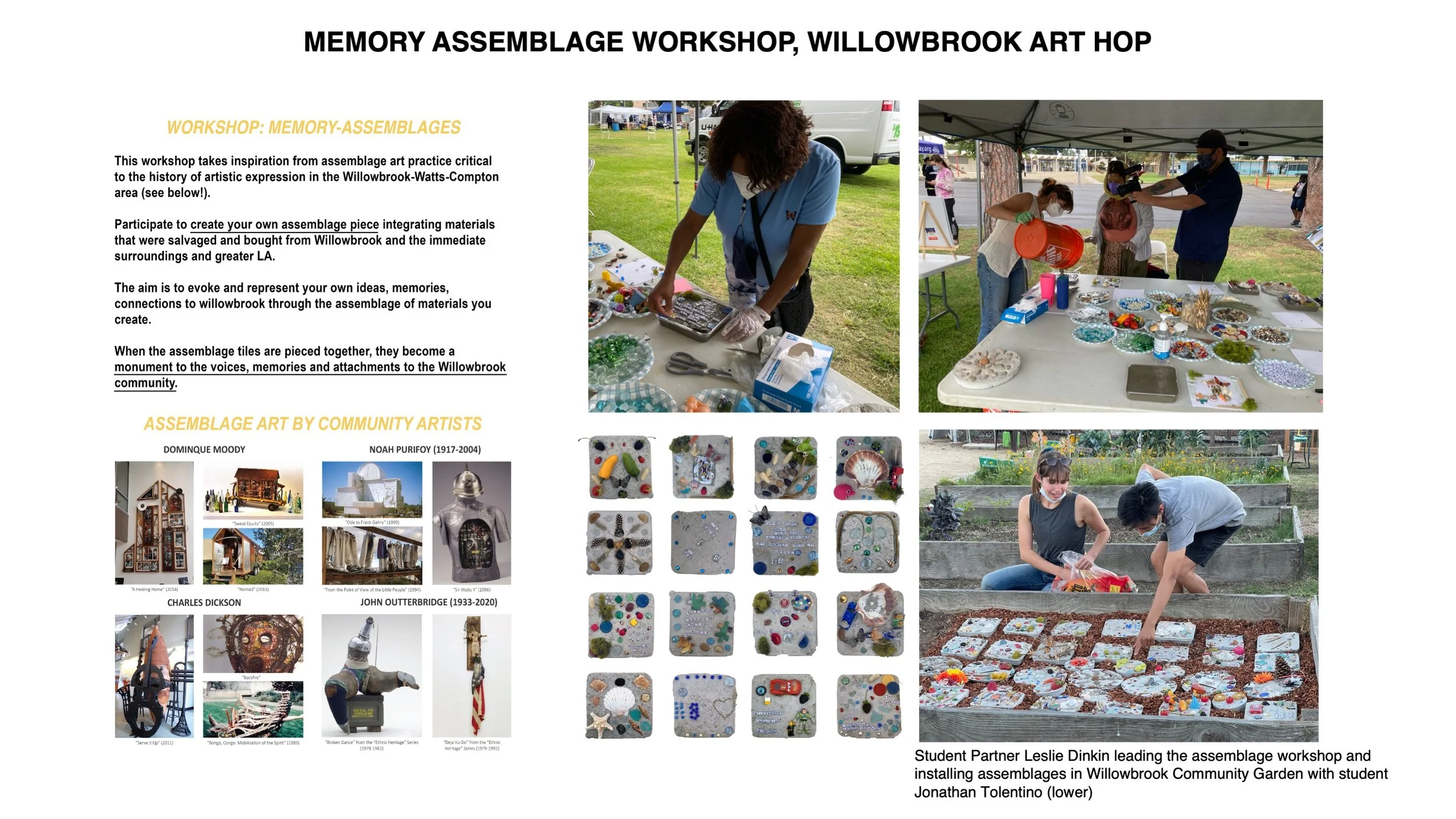
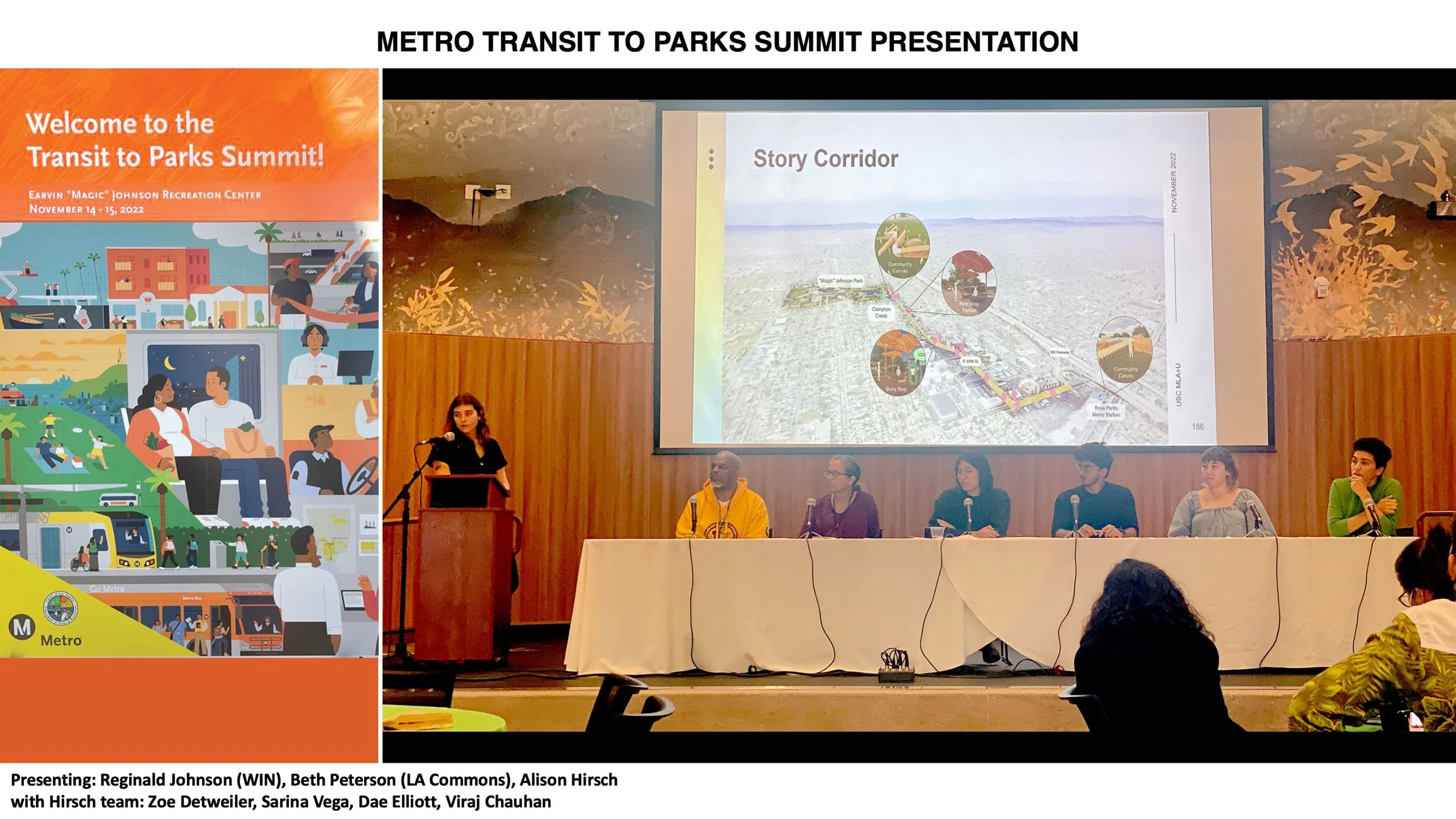
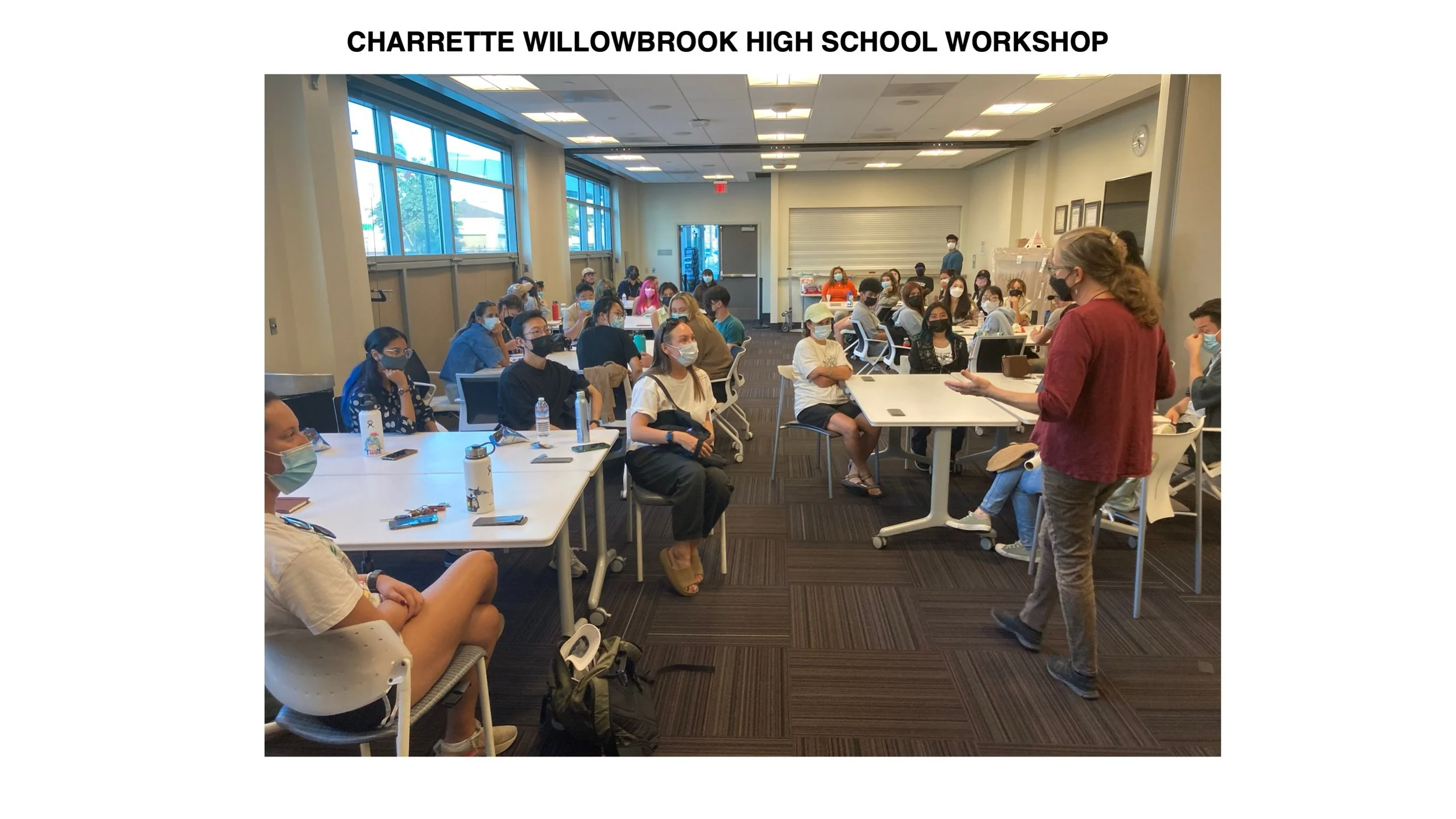
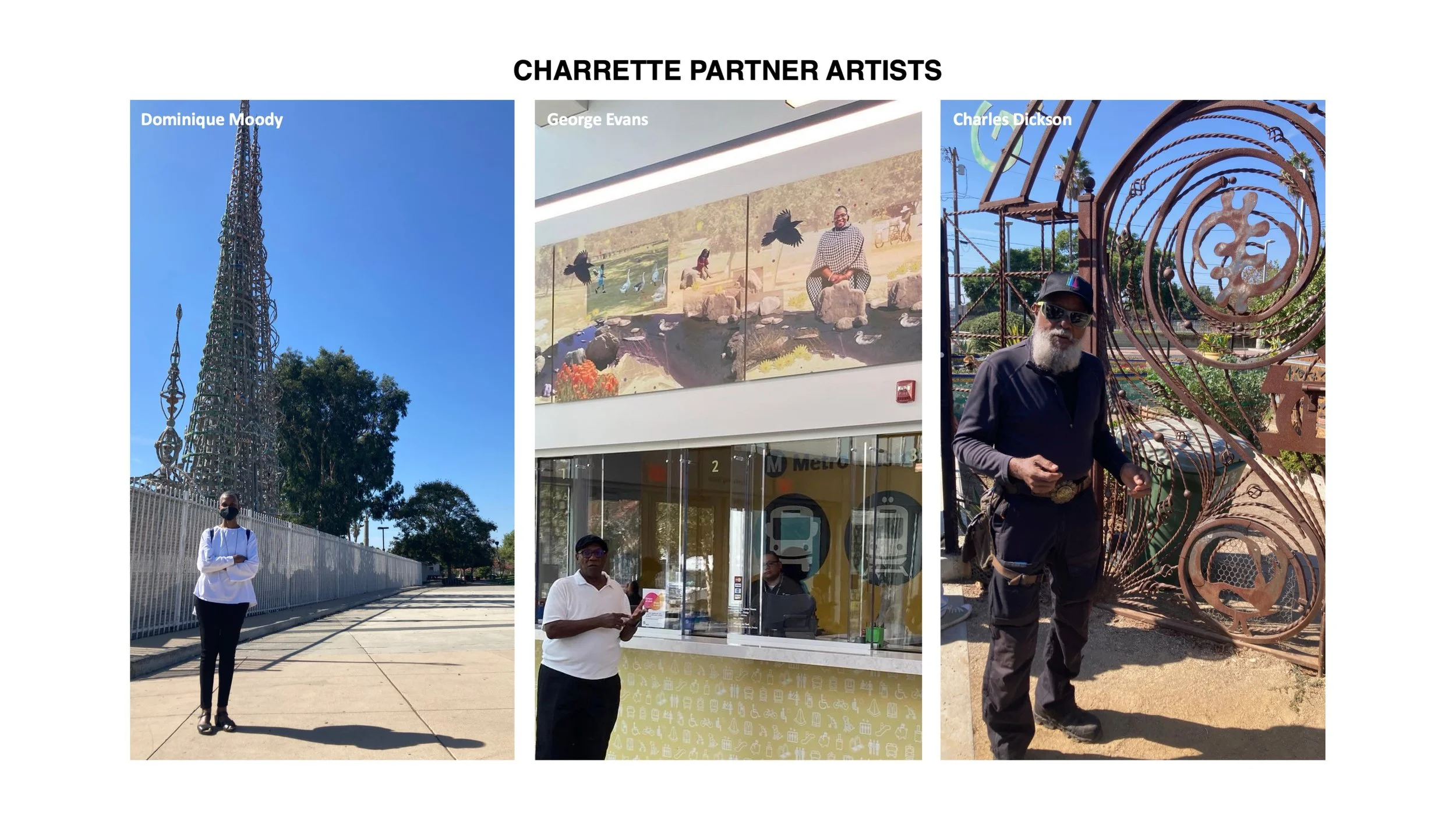
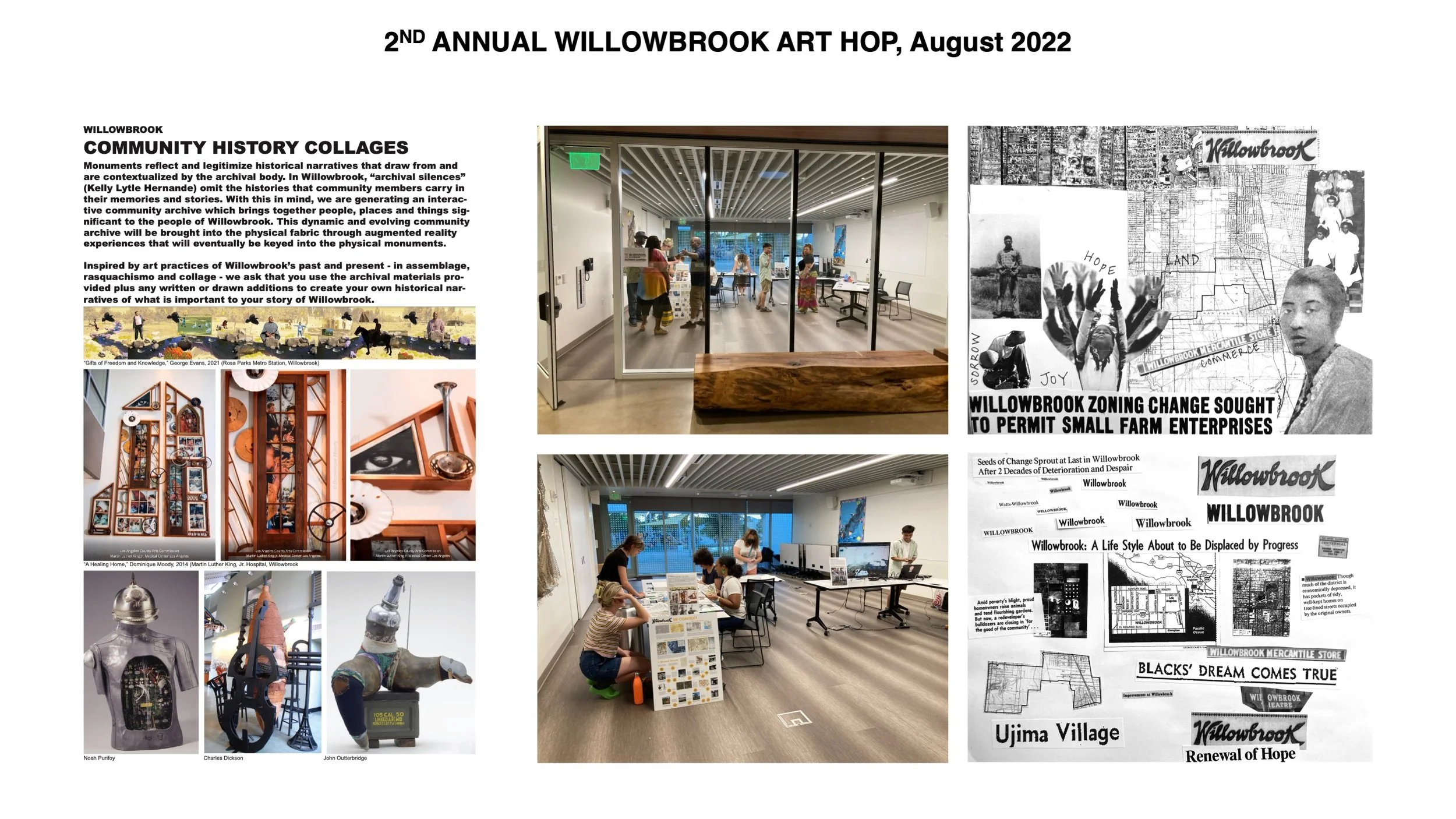
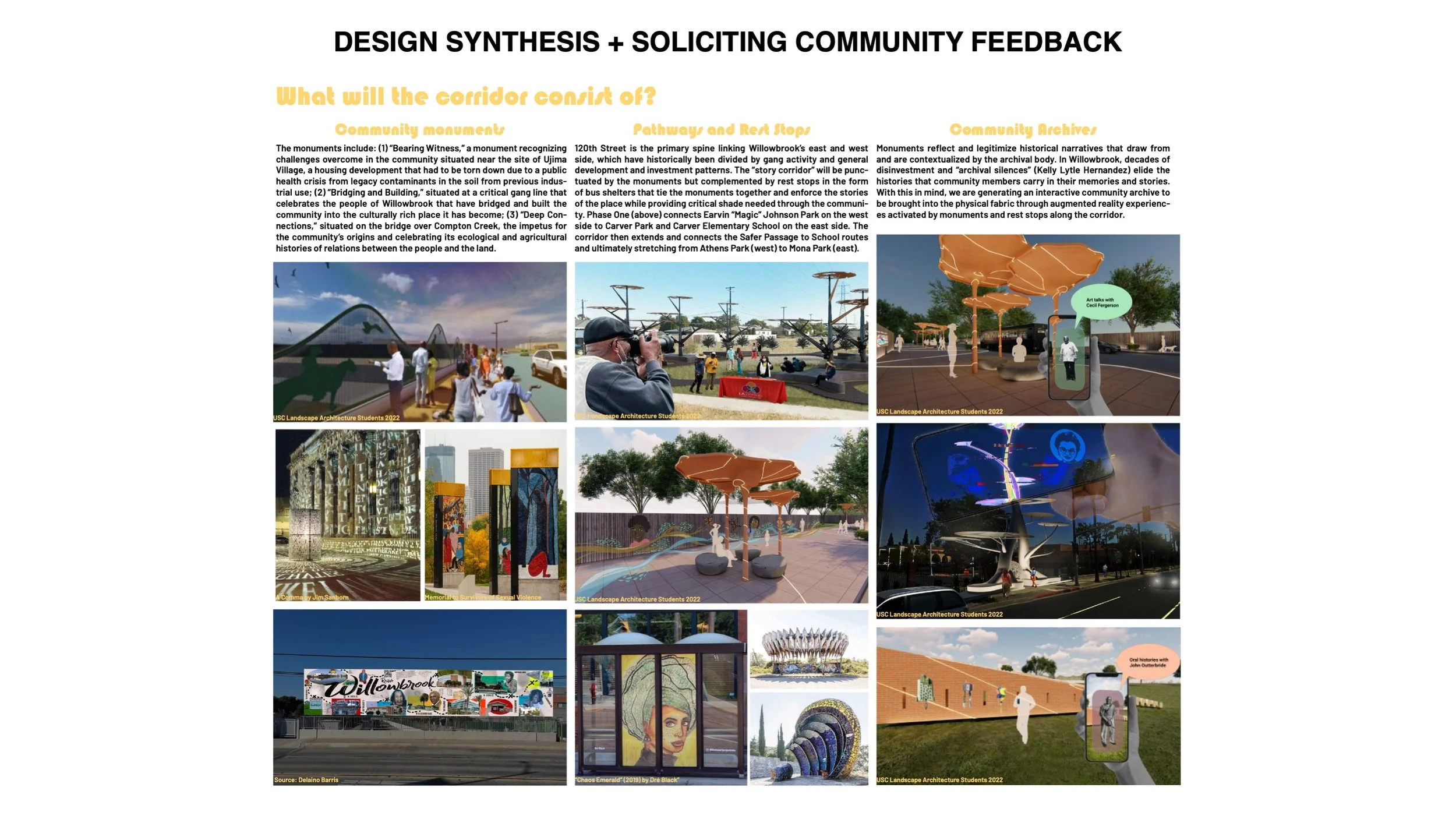
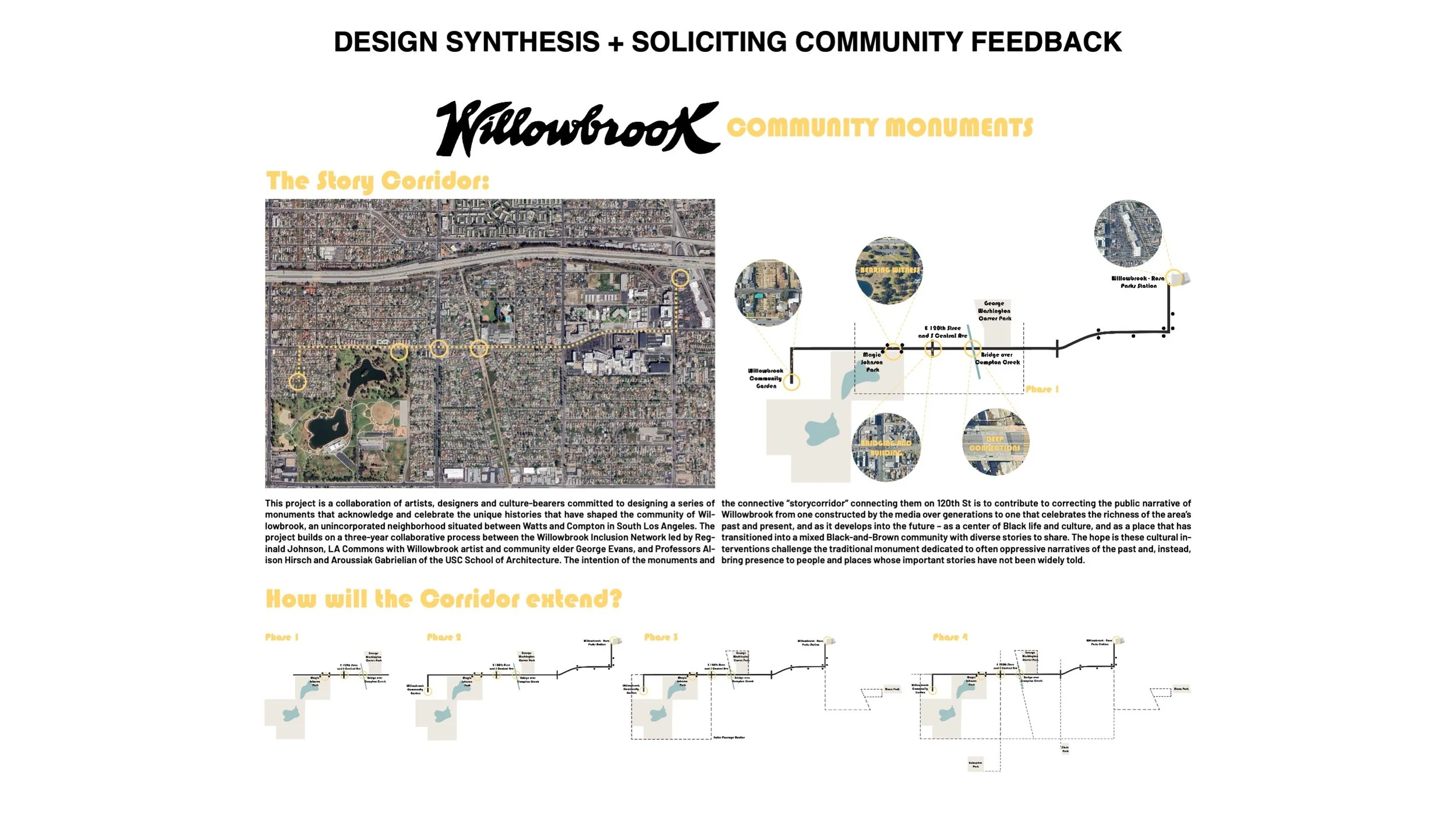
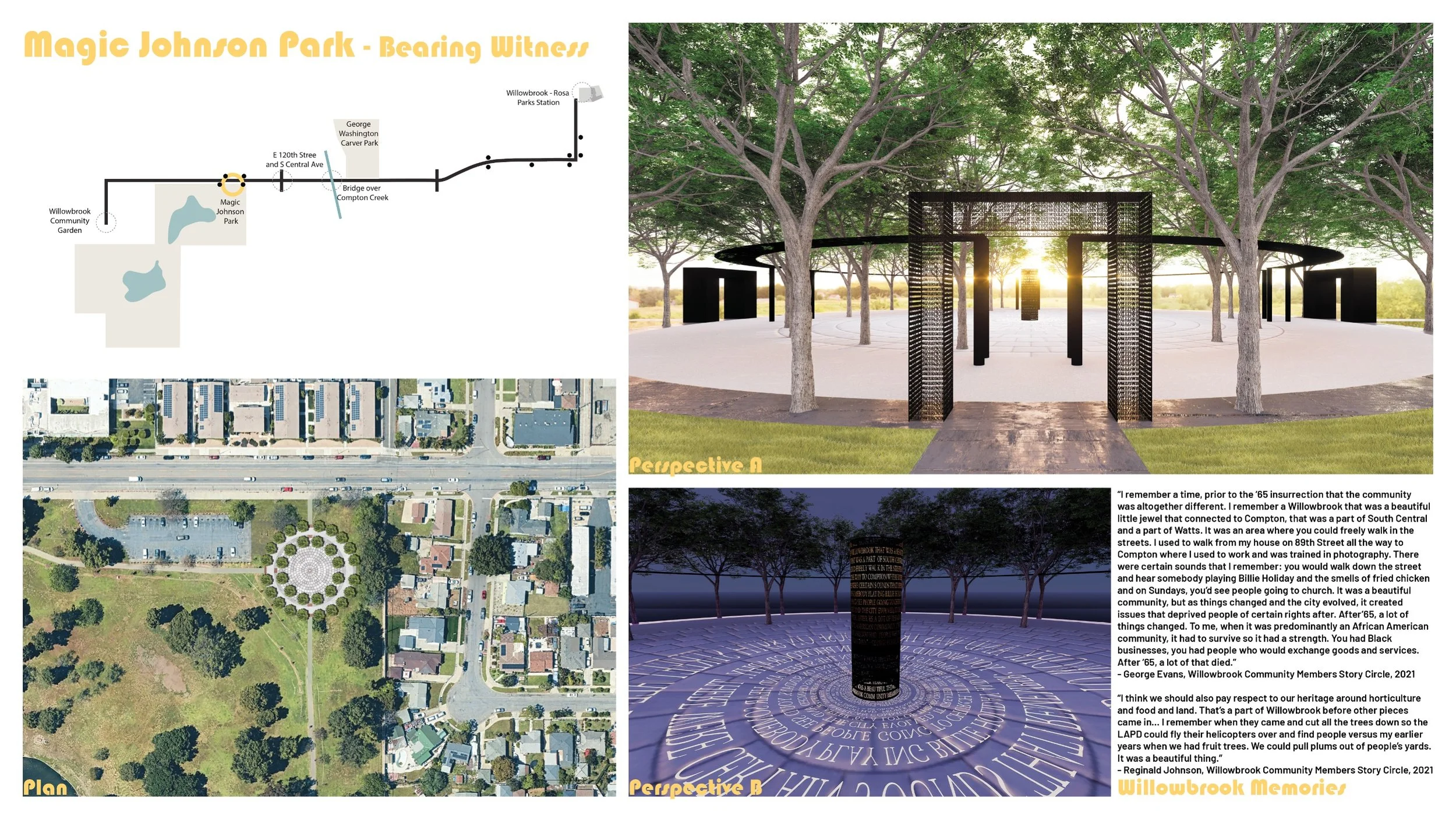
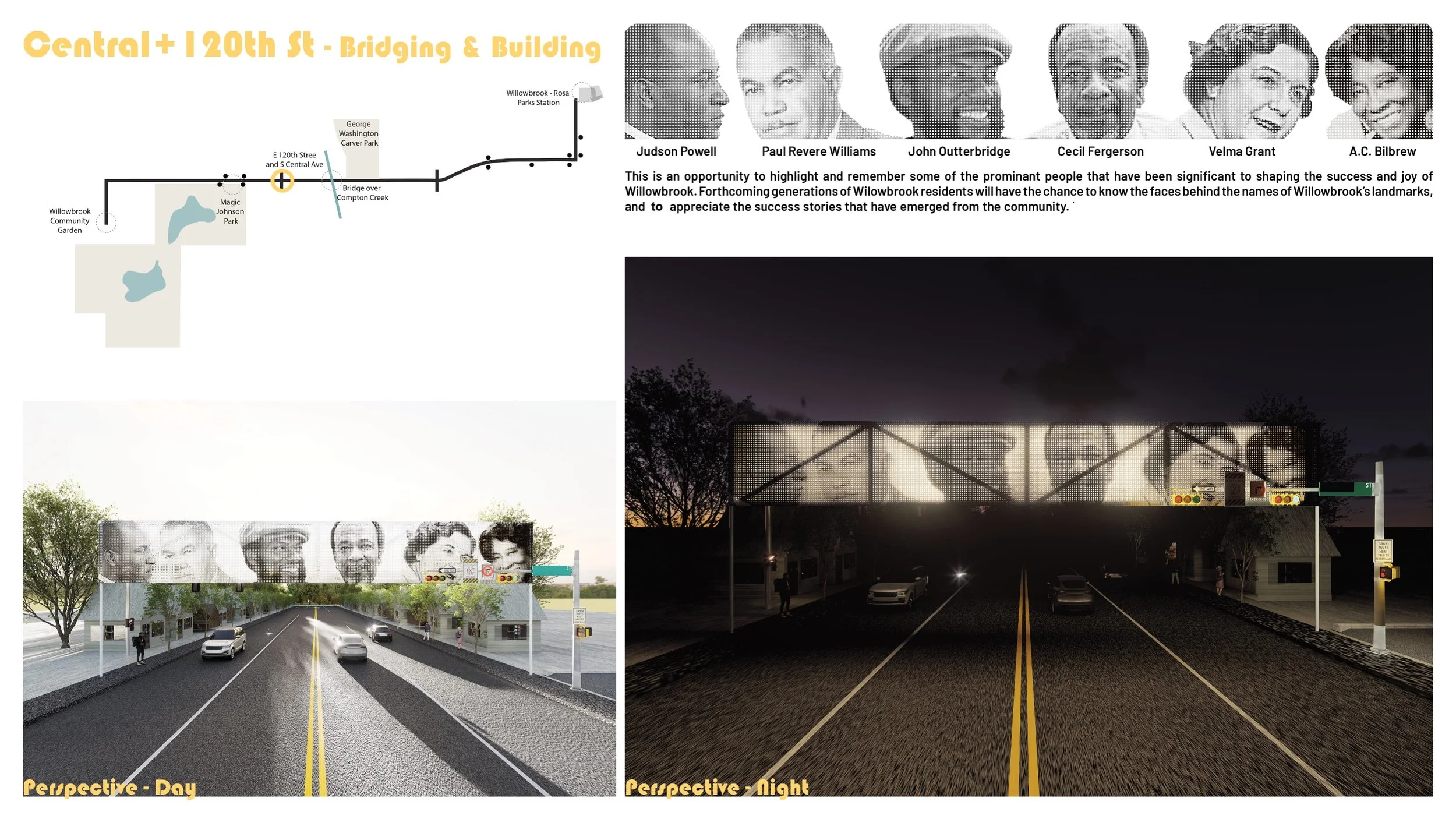
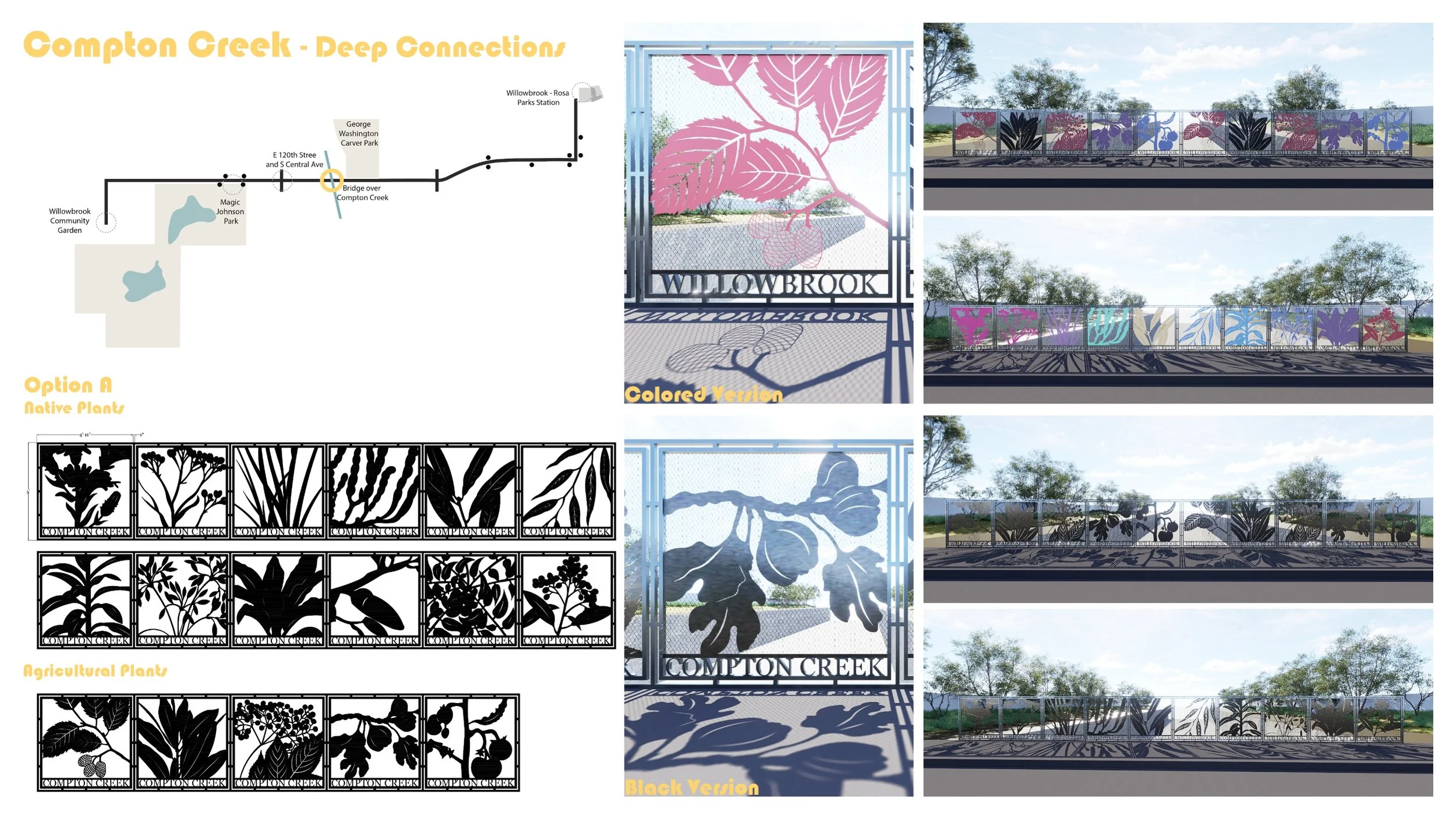
The Willowbrook Community Monuments & Story Corridor is a multi-phase public memory and cultural infrastructure project developed in partnership with the Willowbrook Inclusion Network (WIN), LA Commons, community artist and culture-bearer George Evans, South Los Angeles youth artists, Willowbrook residents, and public agencies. The project seeks to reshape public perceptions of Willowbrook—an unincorporated community between Watts and Compton—by elevating stories that have long been overlooked and suppressed, and that center resilience, culture and creativity.
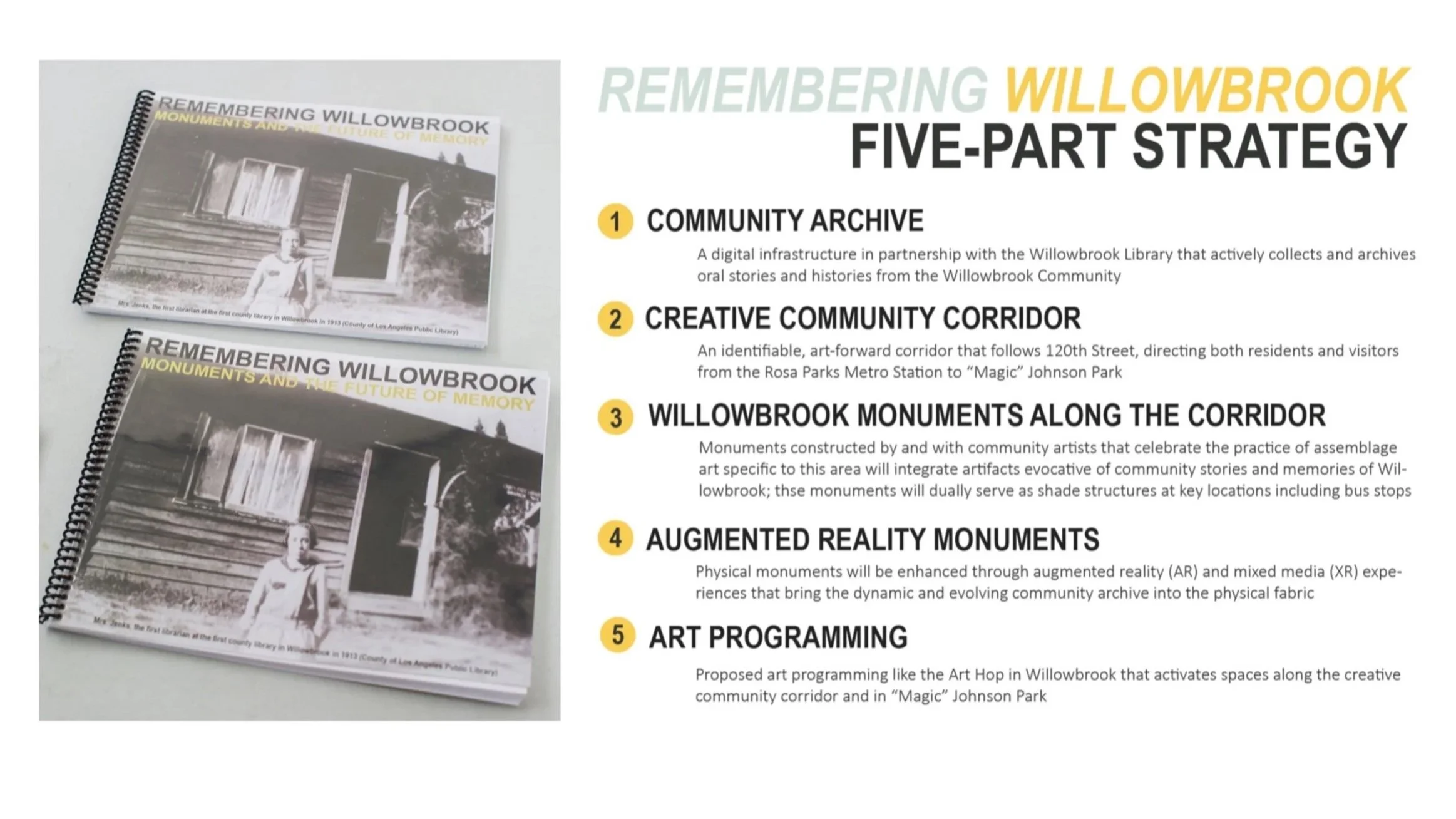
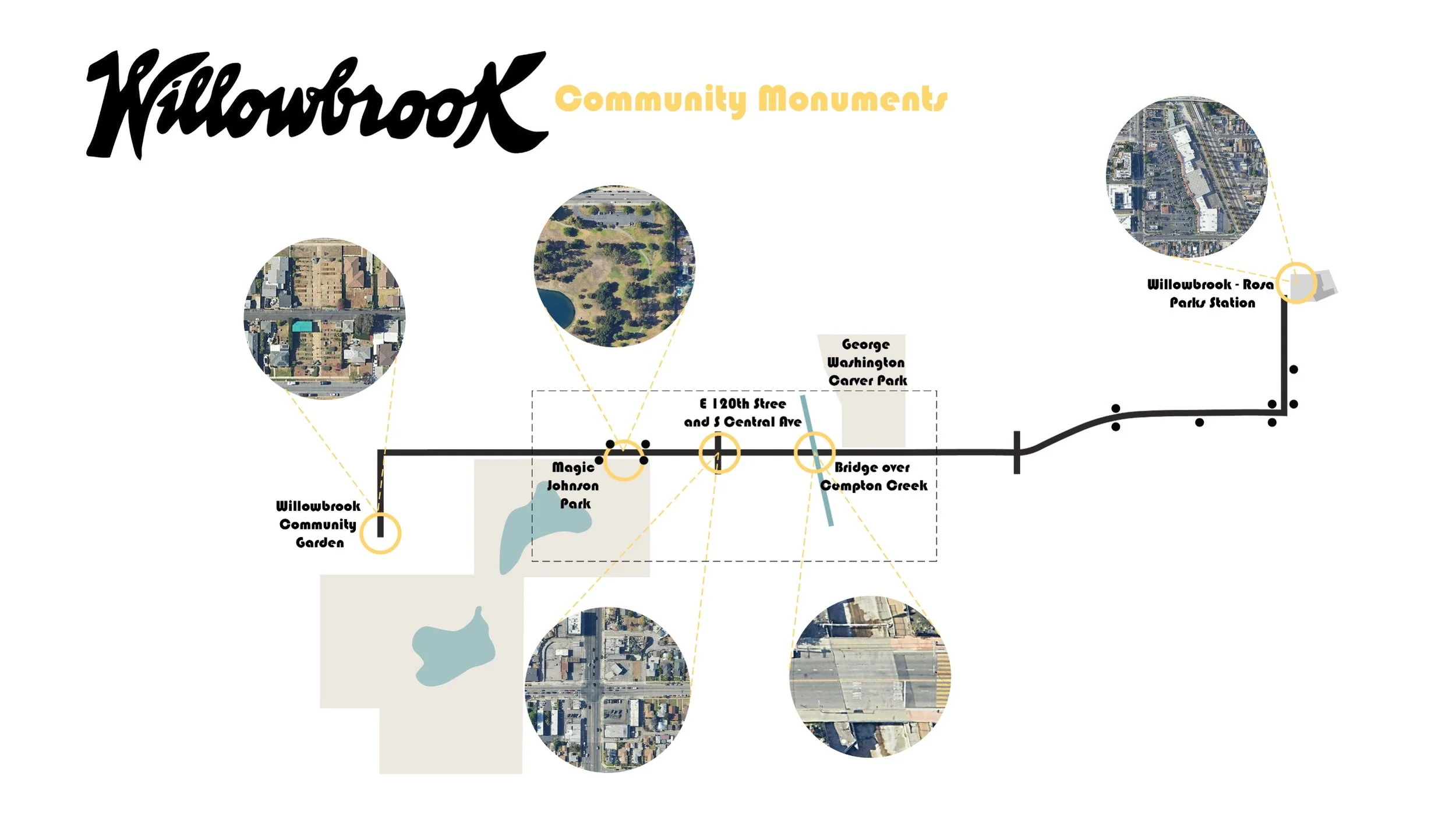
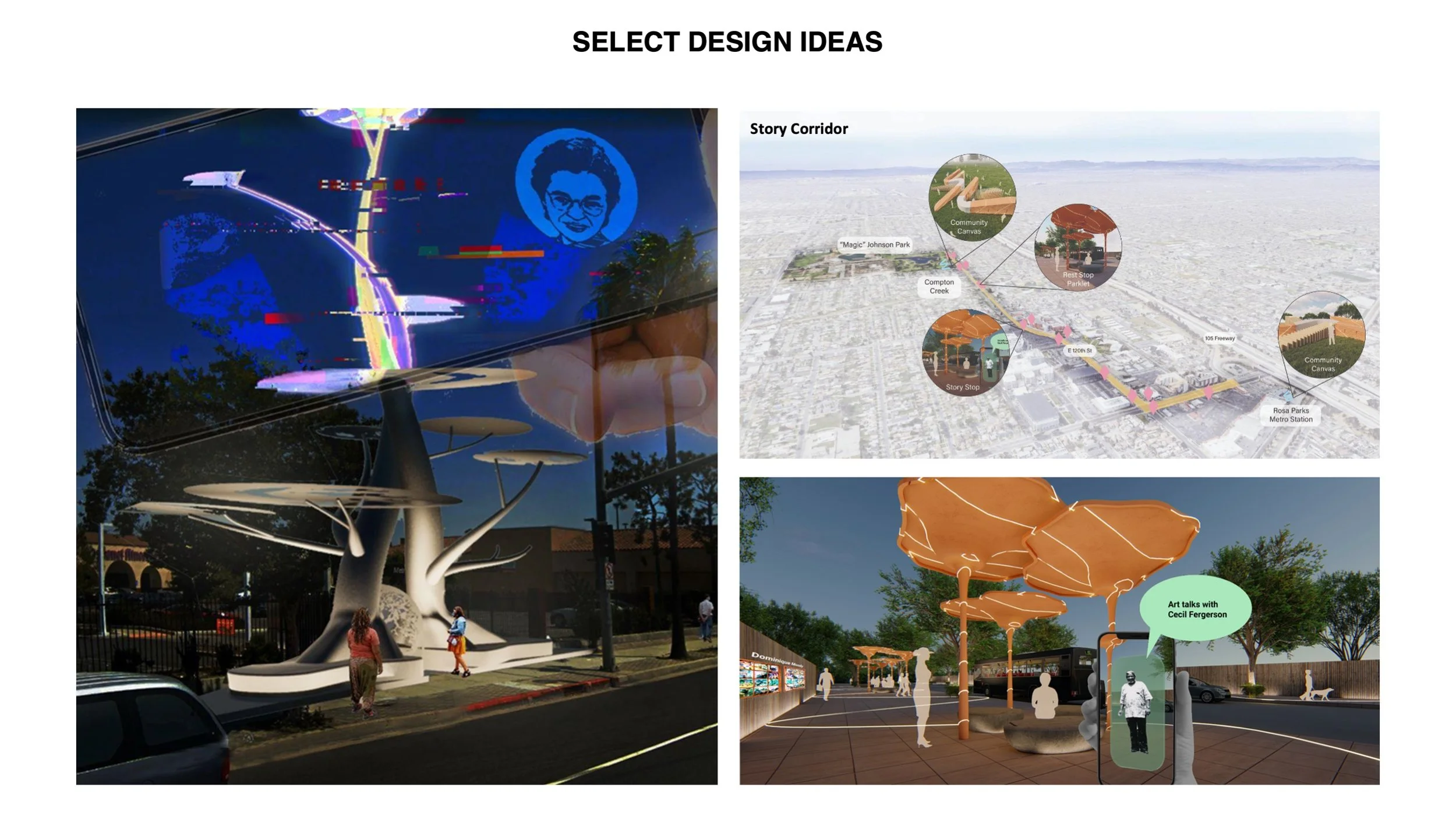
Grounded in years of community engagement, arts programming, and design investigation, the project culminates in a network of interconnected cultural infrastructures along 120th Street—the primary corridor linking Willowbrook’s historically divided east and west sides. Central components include three community-designed monuments, a digital “Rebel Archive” of oral histories and community knowledge, augmented reality storytelling experiences, and a series of public art and educational programs that keep community narratives active and evolving.
Rather than commemorating a singular historical event, the monuments celebrate interconnected stories of environmental justice, community leadership, ecological stewardship, resilience, liberation, and joy. Together they form a Story Corridor that connects schools, parks, community institutions, and everyday public spaces through layered experiences of memory and storytelling.
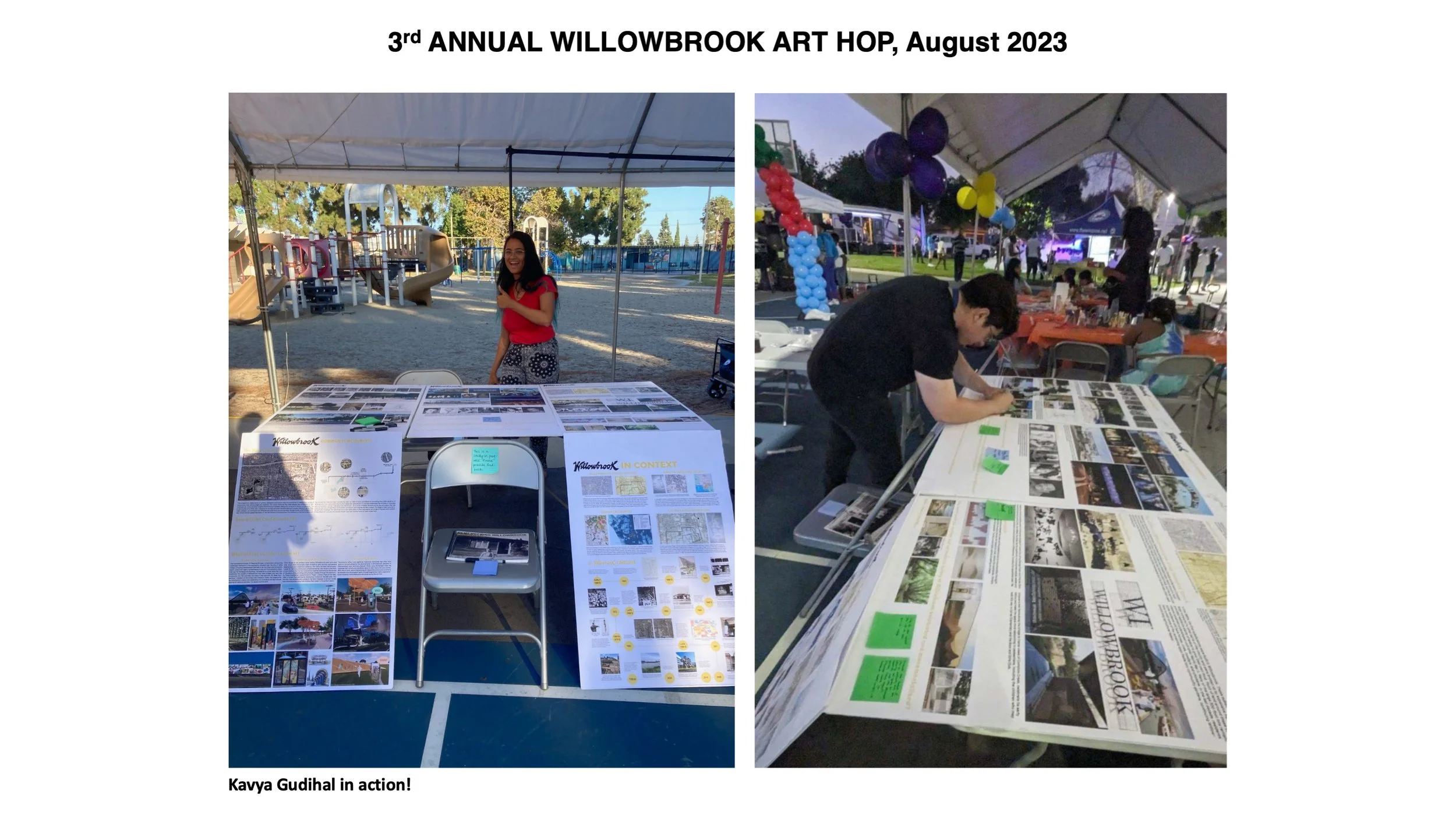
The project has generated a widely shared framework for community-led memorialization, produced temporary and permanent public artworks, established a growing digital archive, engaged multiple generations of Willowbrook residents, and strengthened partnerships among artists, educators, organizers, and public agencies. By positioning memory as a form of civic infrastructure, the initiative demonstrates how design can support cultural visibility, placekeeping, and community self-determination in neighborhoods undergoing rapid change.