RECIPE LANDSCAPE (PRUITT IGOE NOW)
St. Louis, MO
With foreground design agency
Prize winner of the ‘Pruitt-Igoe Now’ international design ideas competition, 2012
Exhibited in: “A New Utopia,” Marlboro Gallery, Largo, MD; “Pruitt Igoe and Other Architectural Fictions,” AIA Portland; “Pruitt-Igoe, Why This, Why Here?” Washington University; “Pruitt Igoe Now,” Old North St. Louis Restoration Gallery
Published in (selected): On Site: Review 33 (2015); Studies in the History of Gardens and Designed Landscapes (2014); 306090: (Non)Essential Knowledge for (New)Architecture (2013); Journal of Architectural Education 67/1 (2013); St. Louis Beacon (June 25, 2012); Metropolis Magazine (December 14, 2012)
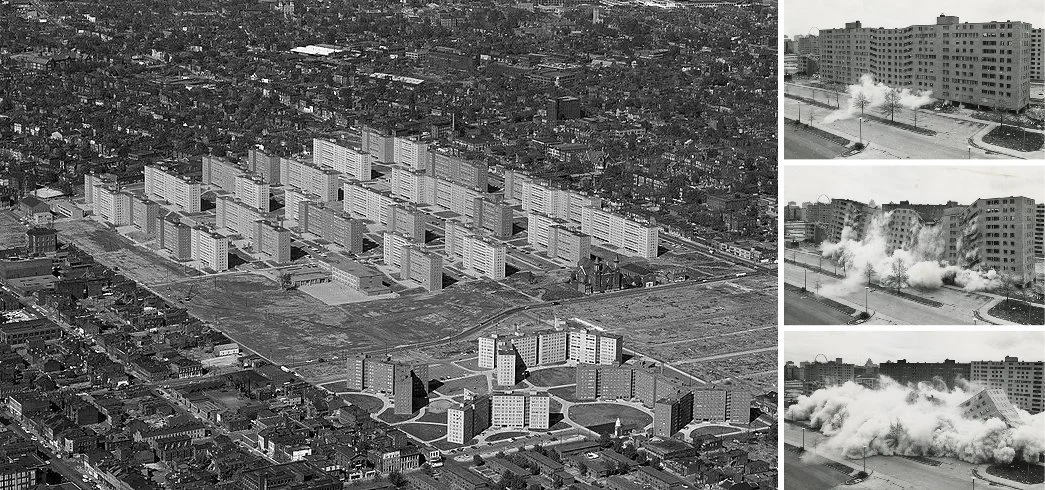
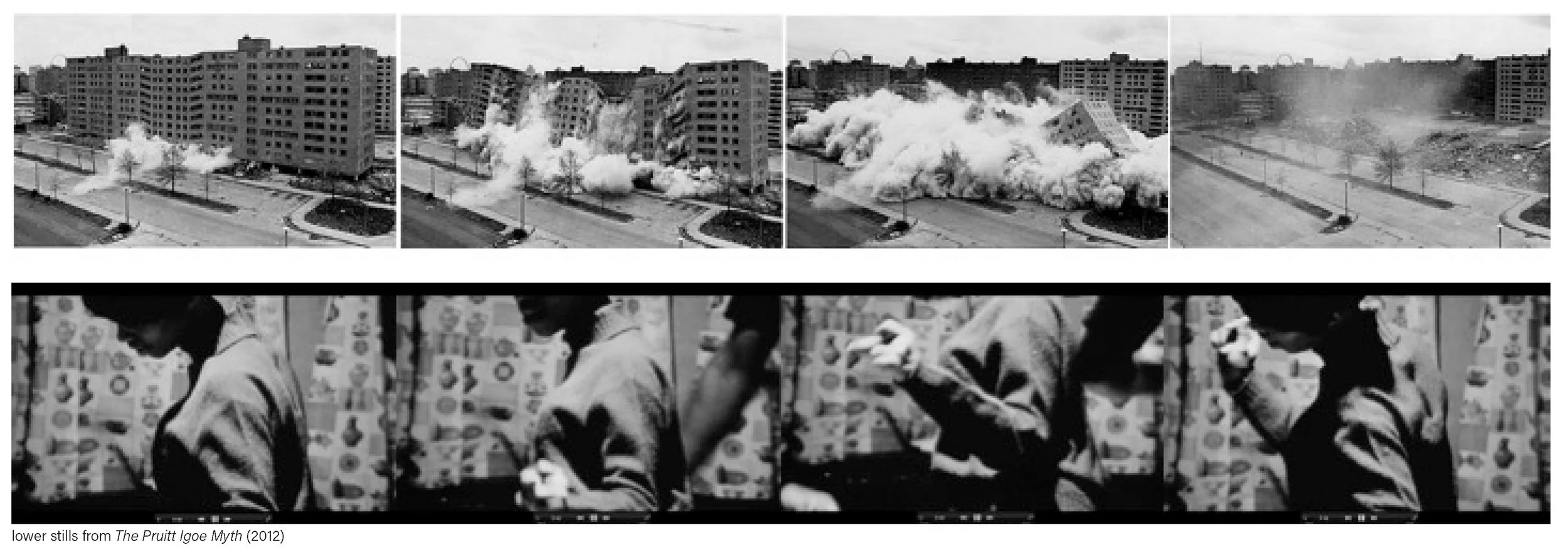
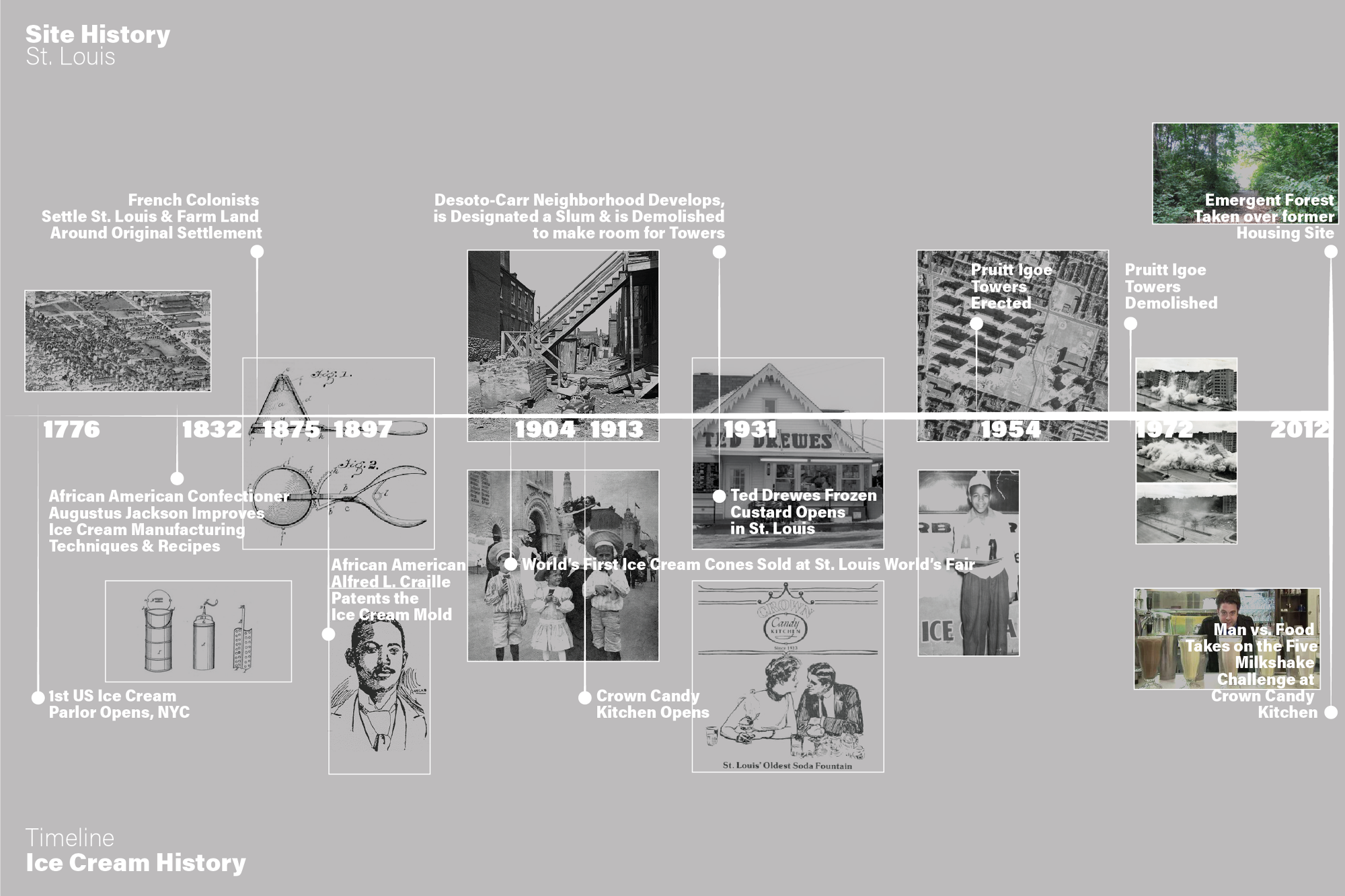
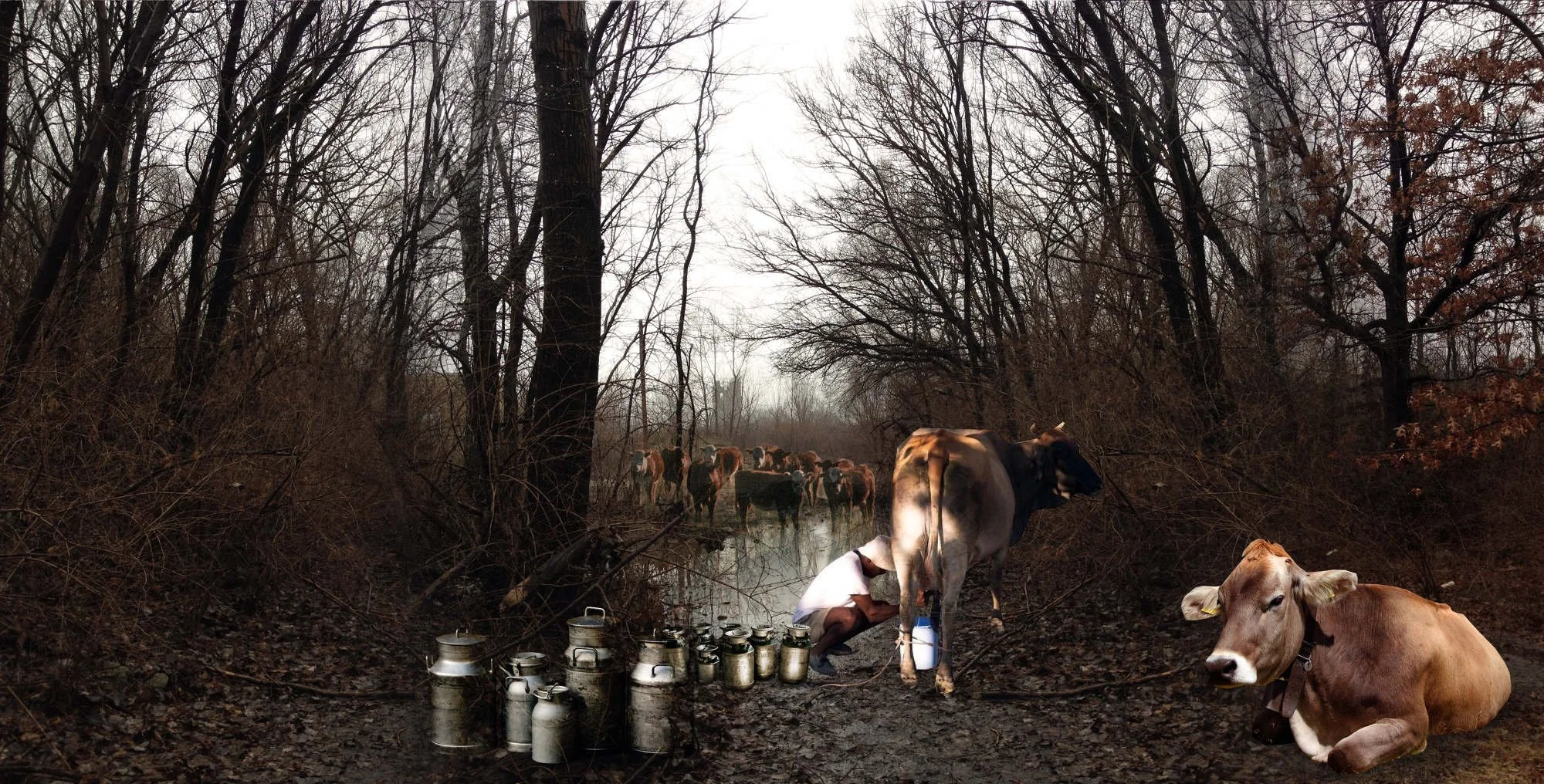
The Pruitt-Igoe housing complex in St. Louis was completed in the mid-1950s as a modern public housing development but quickly became emblematic of the failures of postwar urban renewal, racial segregation, and disinvestment. Demolished less than twenty years after its completion, the 57-acre site has remained largely vacant for decades, its ruins giving way to spontaneous vegetation and an urban forest. This prize-winning proposal for an international design ideas competition reimagines the site not as a monument to failure, but as a productive landscape that acknowledges its difficult history while cultivating new forms of community, stewardship, and collective identity.
Though memories of Pruitt-Igoe haunt St. Louis and discrimination plagued the project from the start, its early history included dance, exchange, and strong social ties. This proposal celebrates that often-overlooked history by reinstating a landscape of collective ritual and domestic life.
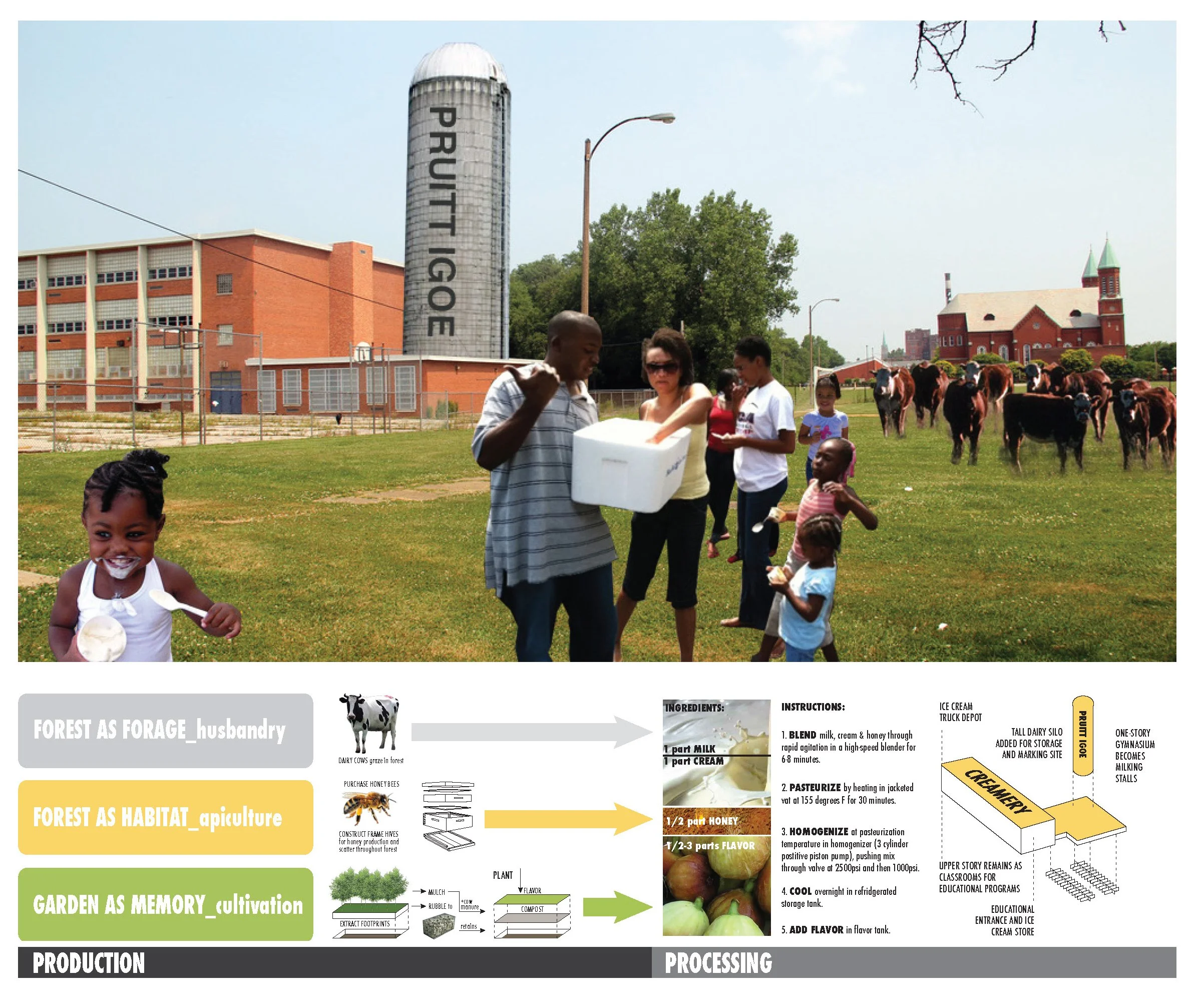
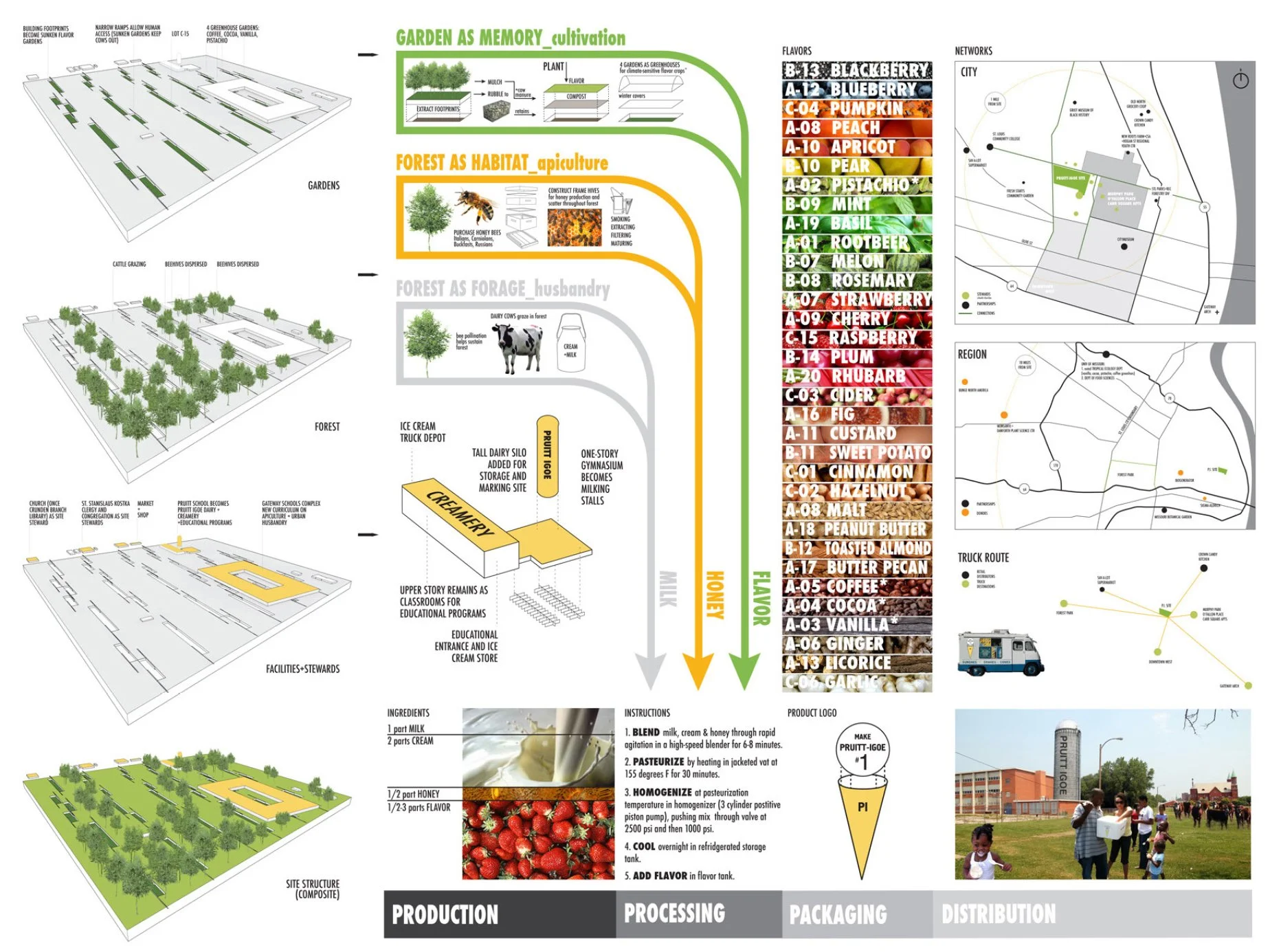
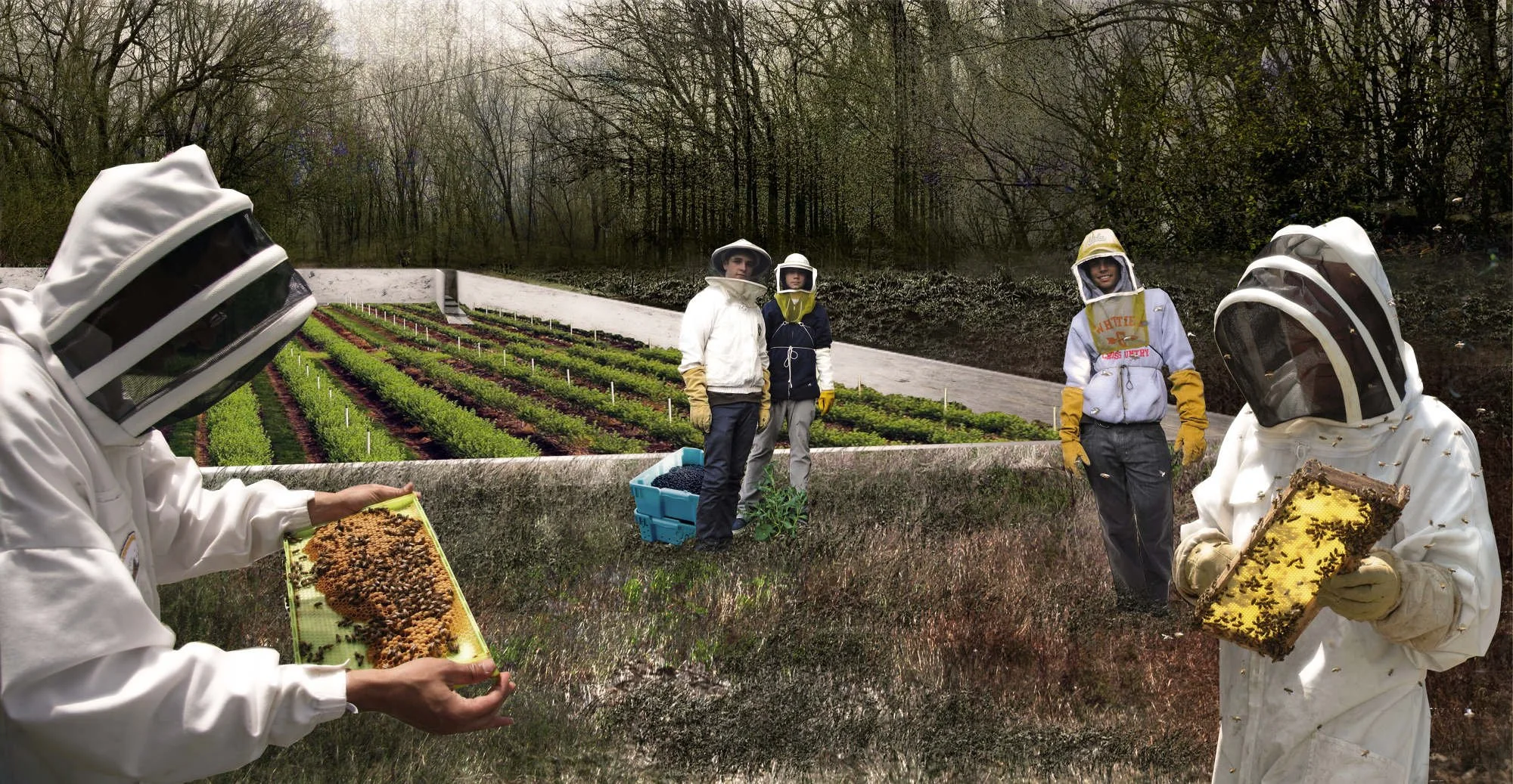
A recipe is not only a list of ingredients but a set of instructions guiding a process. Following a recipe, which leaves room for improvisation, yields a sensory delight that is collectively enjoyed. By cultivating milk and honey, through apiculture and urban husbandry, the Pruitt-Igoe site yields the most savored delight of all – ice cream.
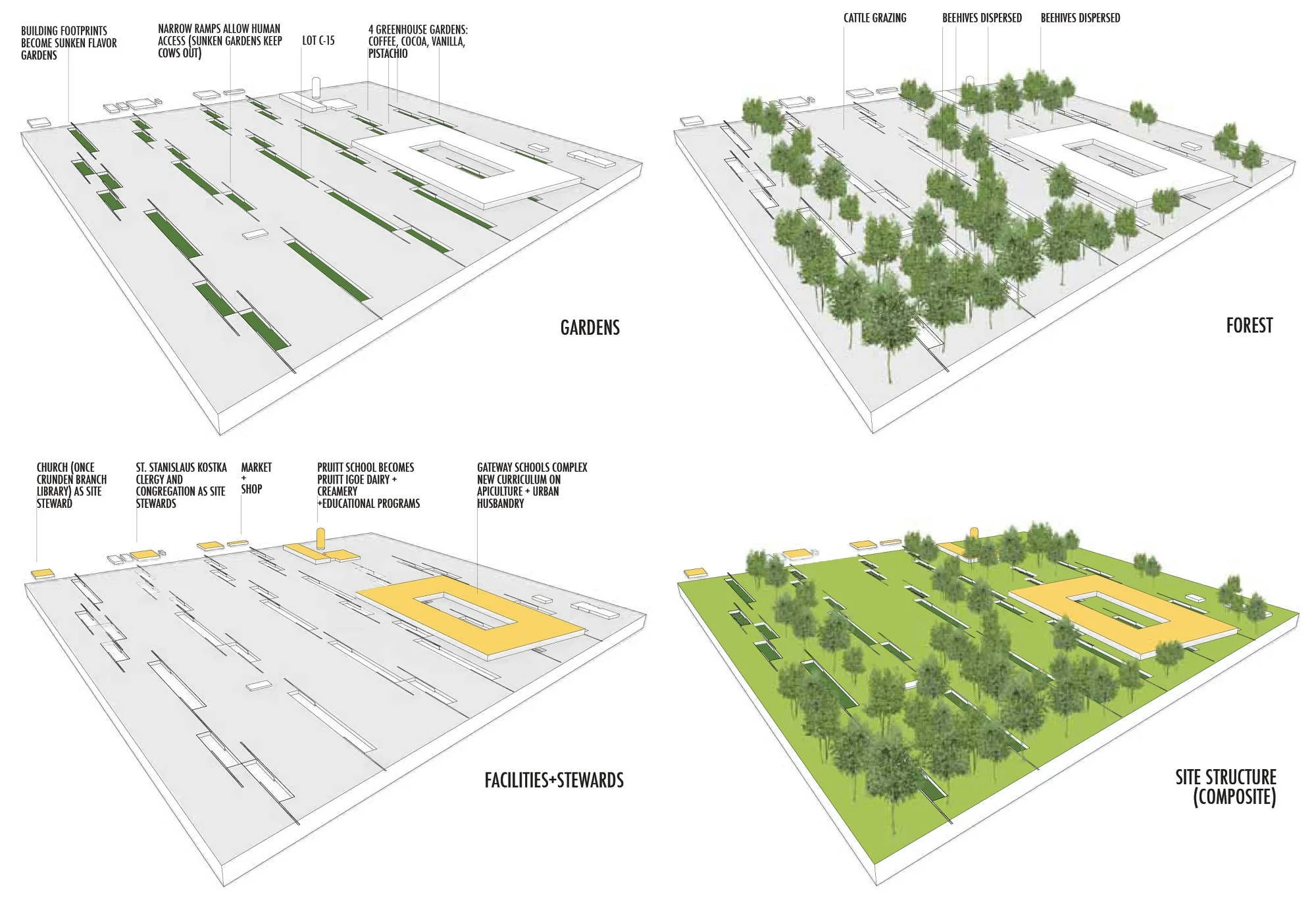
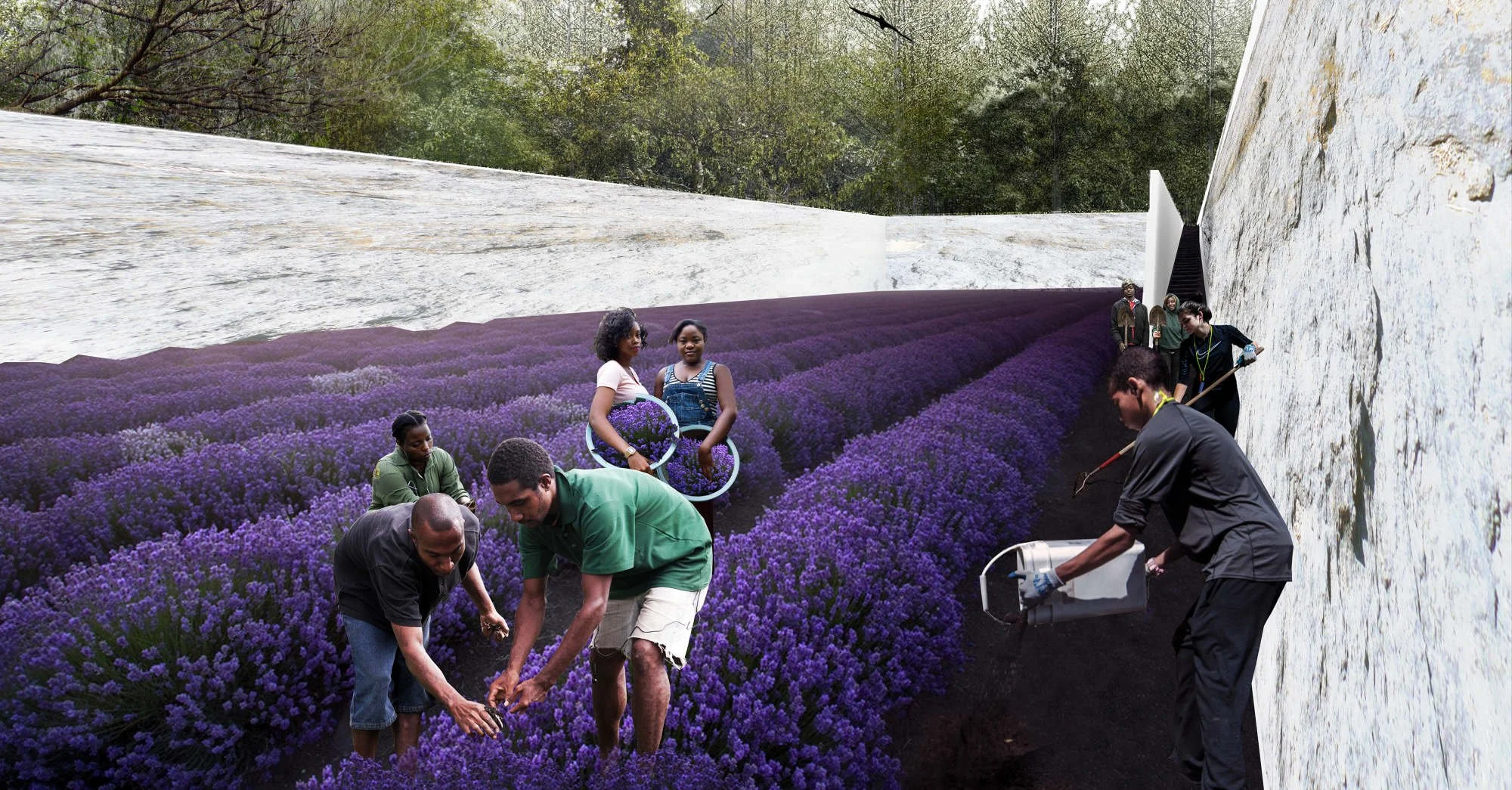
Rather than hiding the scars of history that represent not just an event but perpetuating social inequities still palpable in the surrounding environment, the project proposes that the 33 footprints of the buildings are excavated and planted with gardens that generate 33 flavors to be mixed with milk and honey to produce Pruitt-Igoe Ice Cream varieties.
As a new “land of milk and honey,” ingredients celebrated by the ancients as sacred symbols of fertility and abundance, the landscape of loss is transformed into one of production, growth, and sustenance. The emergent forest may be considered a symbol of neglect and institutional abandonment. The project reframes it as a kind of enchanted forest with the hidden gardens that recognize the site’s past lives and celebrate its most current one.
The transformation also recalls St. Louis’ manufacturing past.The processing of natural ingredients adjacent to their place of production contributes to the conversation on food security and public health—even through the joyful indulgence of ice cream. The long-abandoned Pruitt School building is reimagined as a dairy and creamery, serving both as a place of production and as an educational center for urban agriculture, environmental stewardship, and the cultural rituals of growing, preparing, and sharing food. Together, these interventions create jobs, foster community ownership, and cultivate a renewed civic identity for a landscape long defined by its burdened past.