THE OTHER CALIFORNIA: LAND, LABOR, LOSS, LIBERATED FUTURES ALONG PHANTOM SHORES
Rouse Gallery, Stuckeman School, Penn State University, 2023
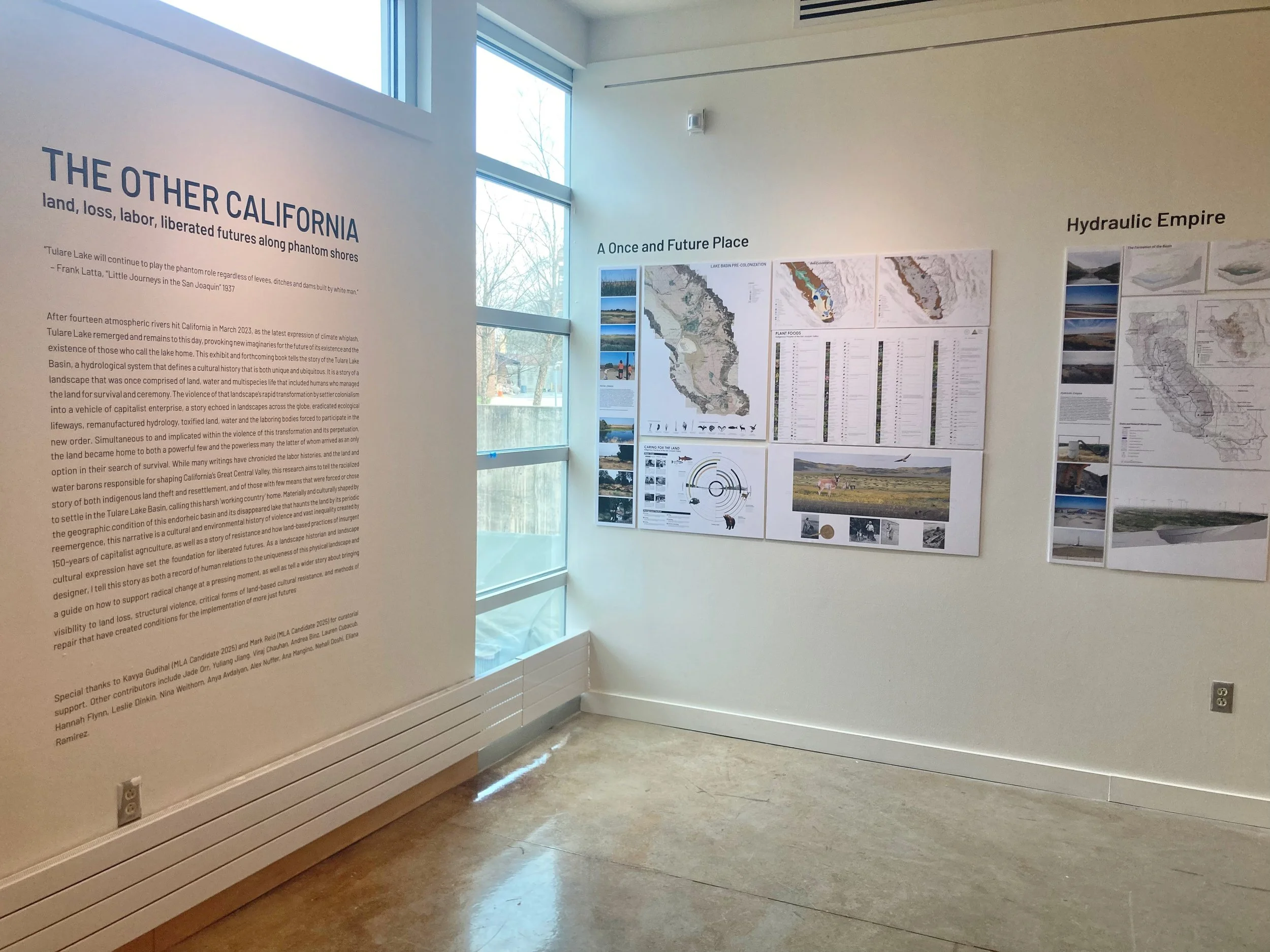
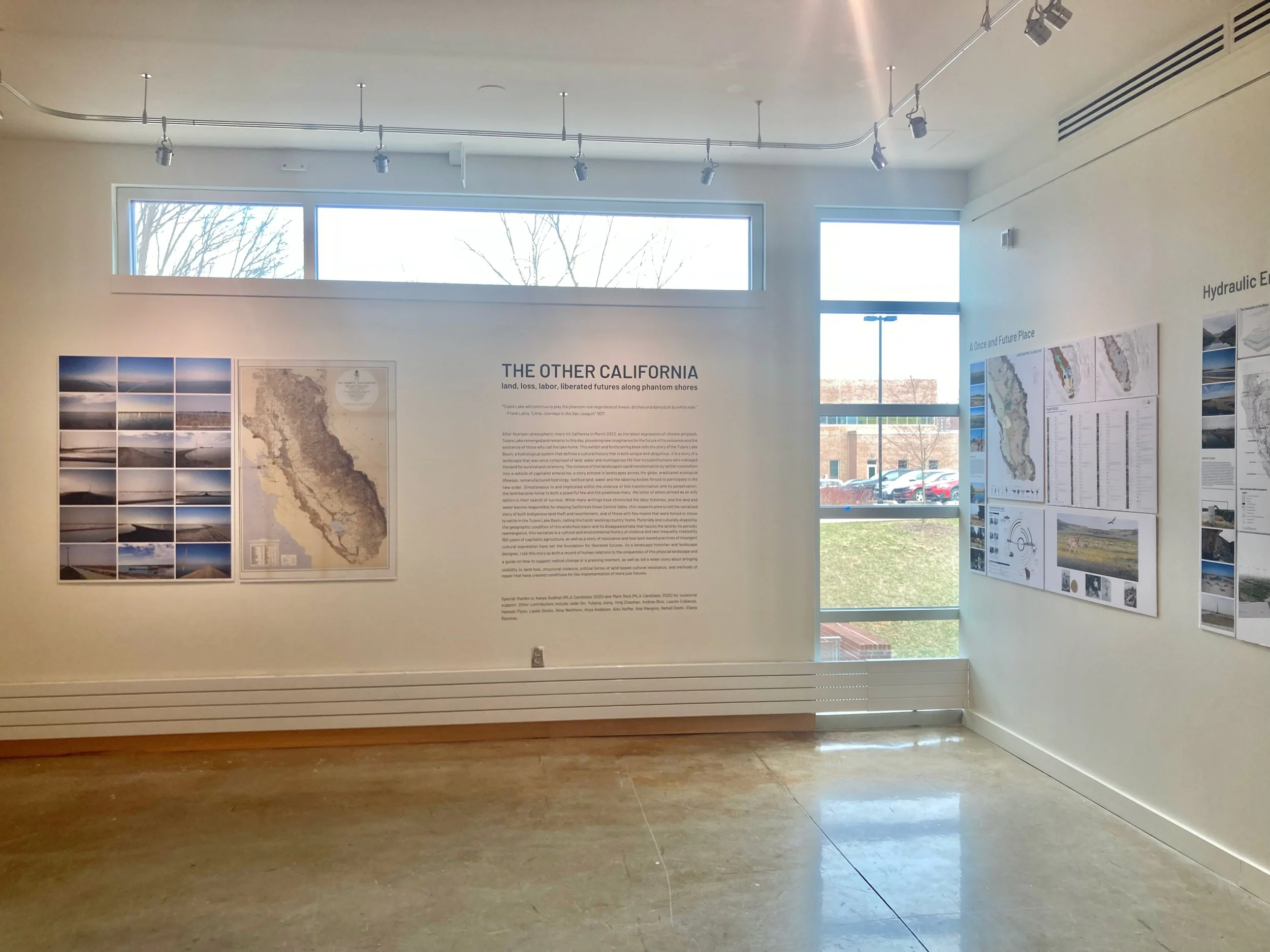
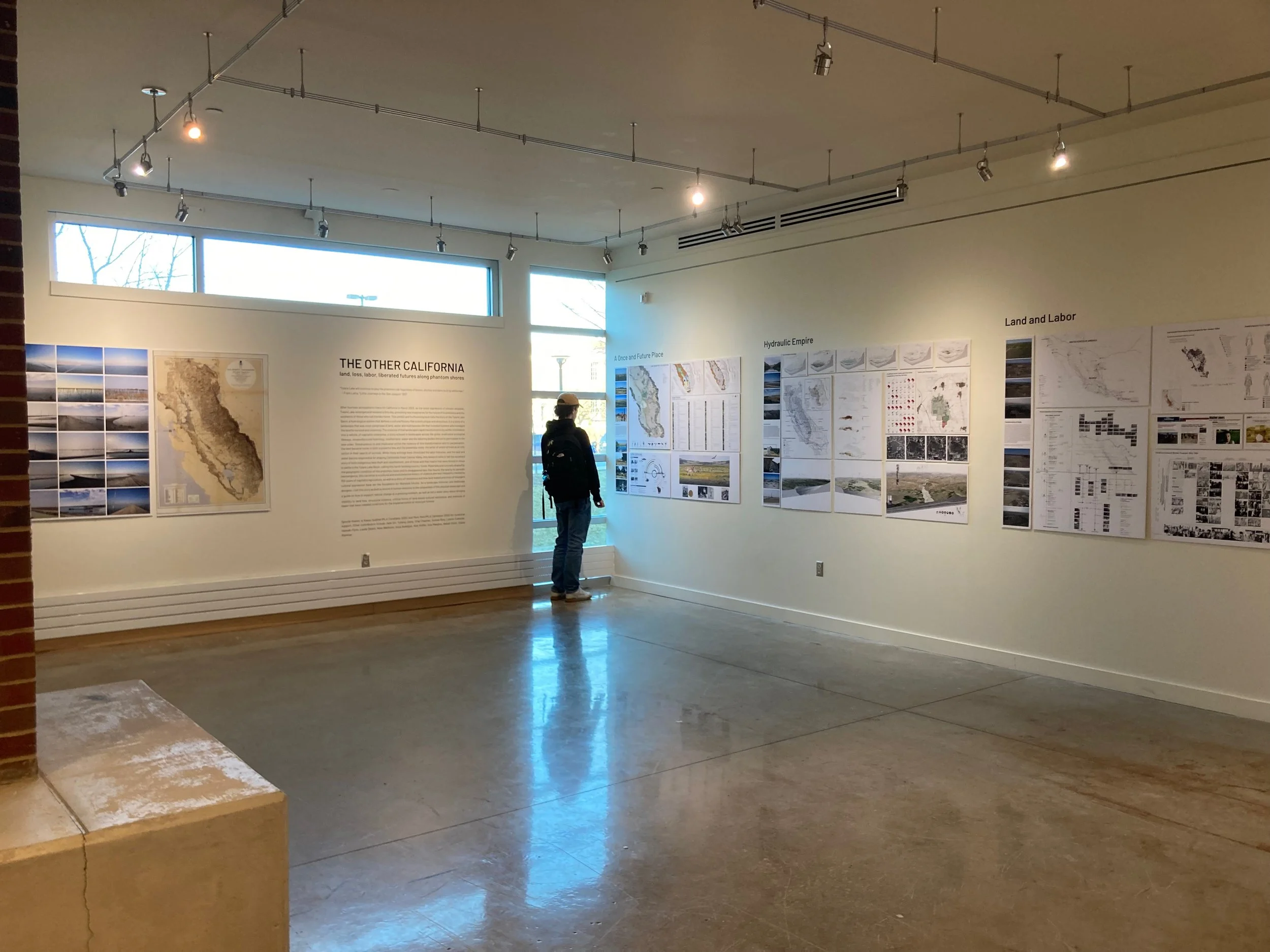
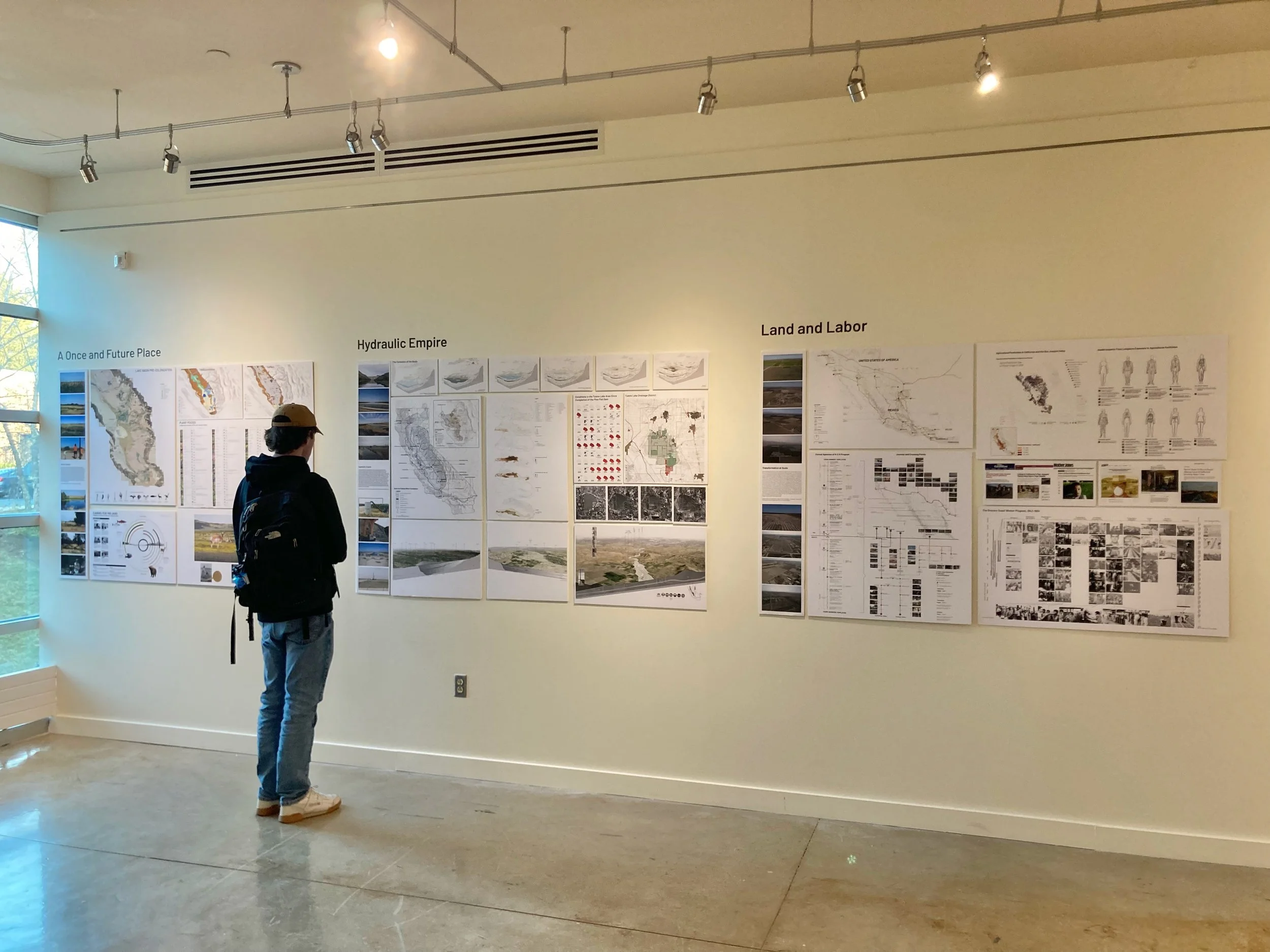
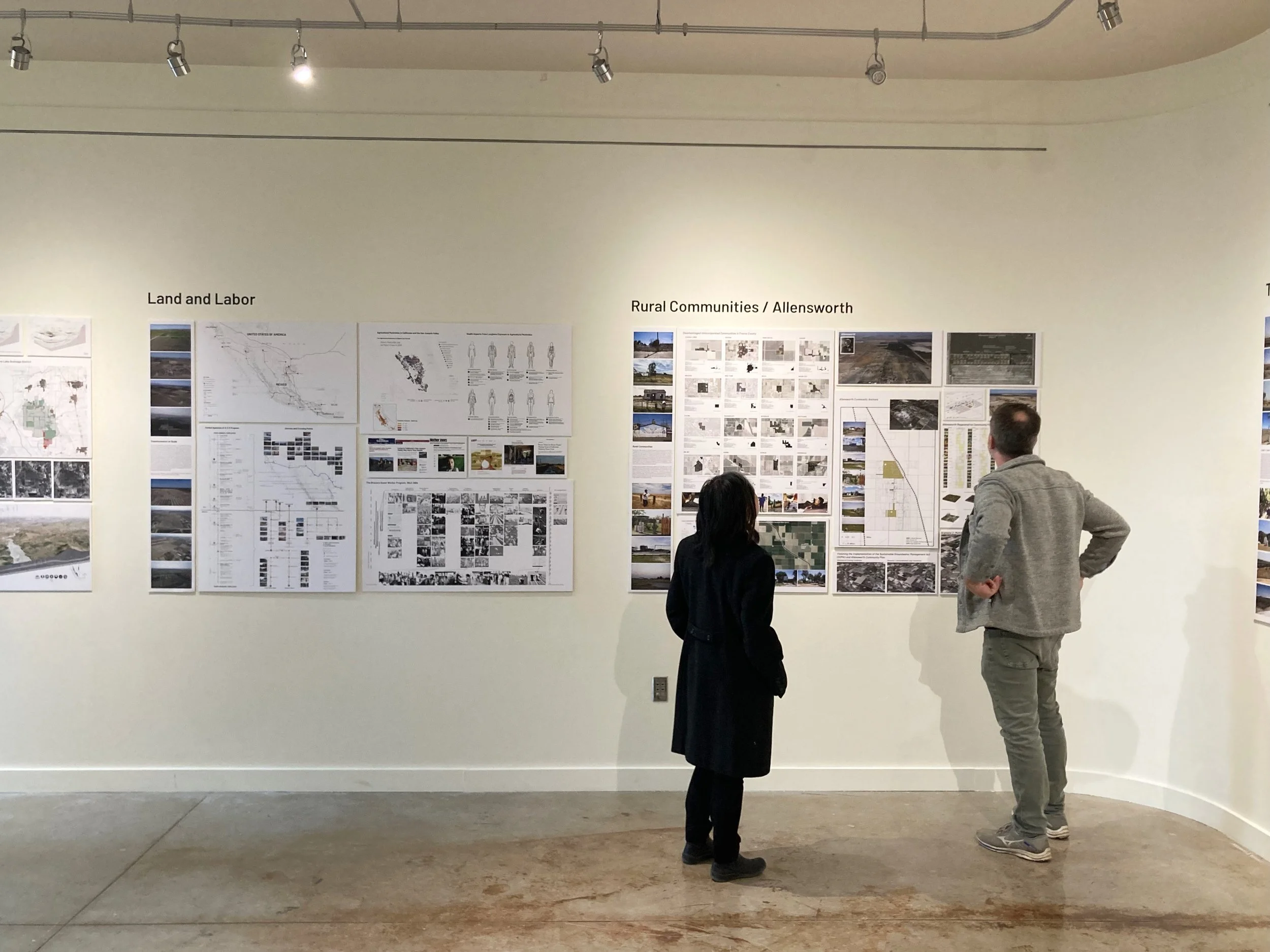
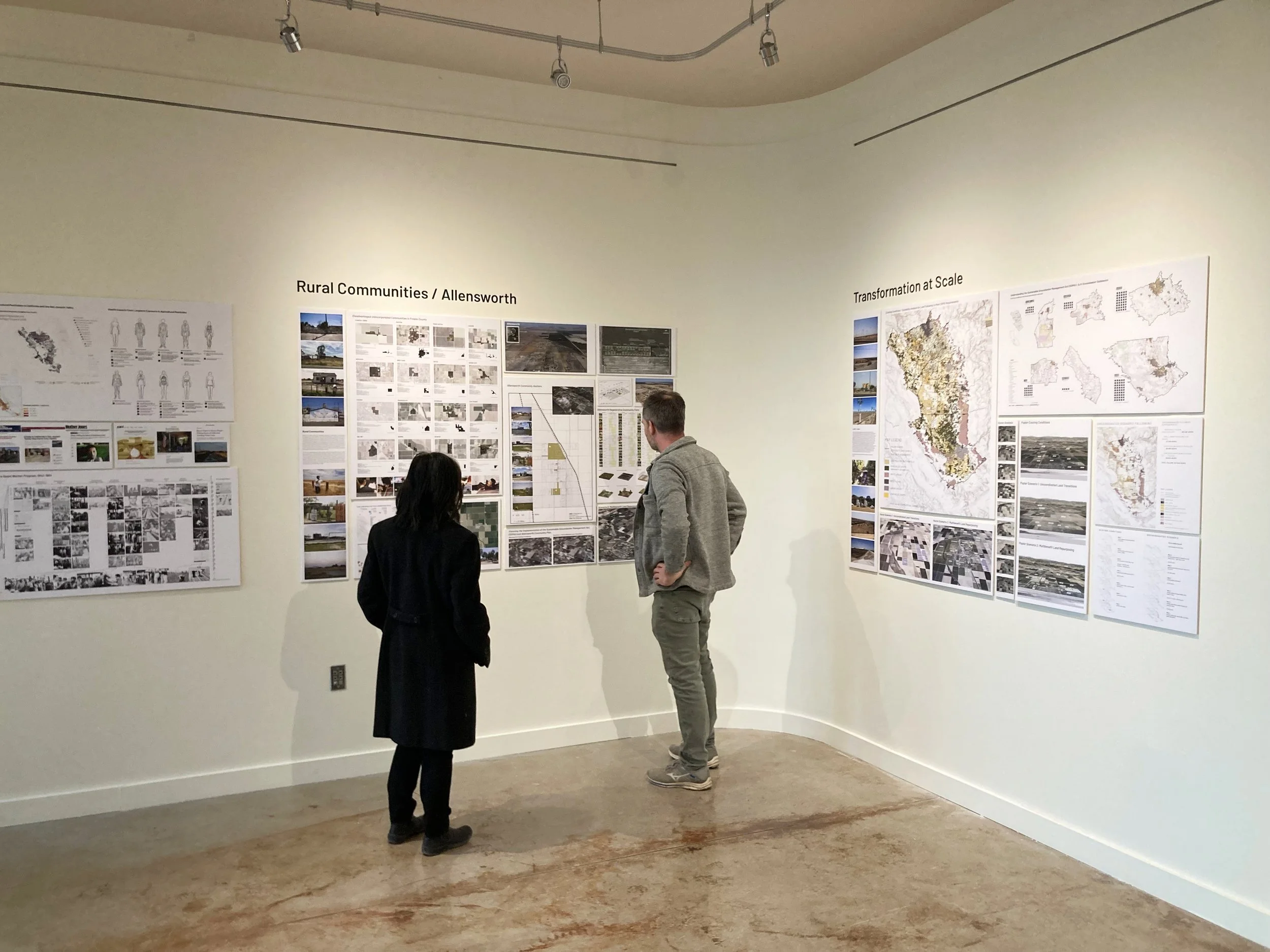
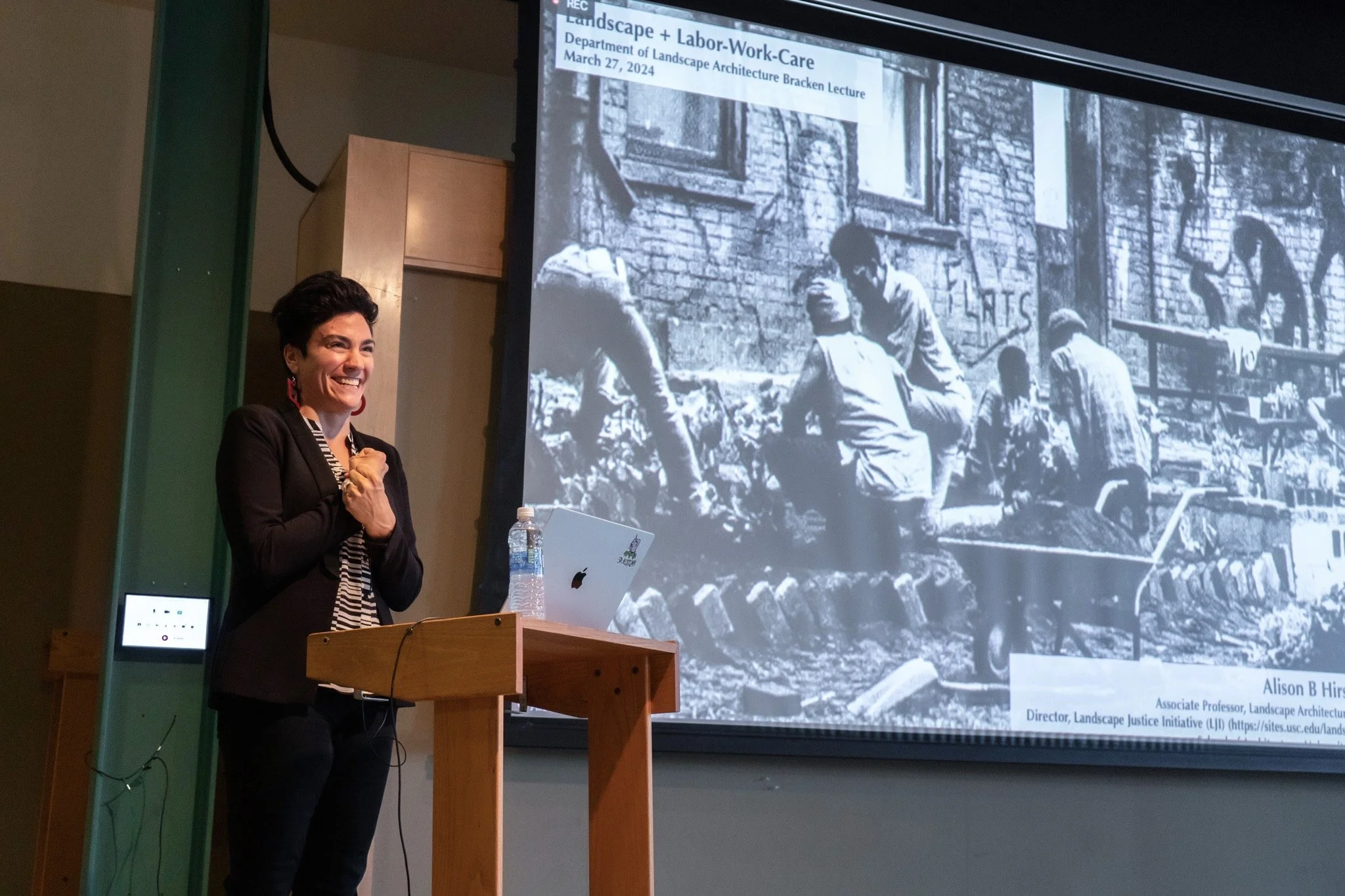
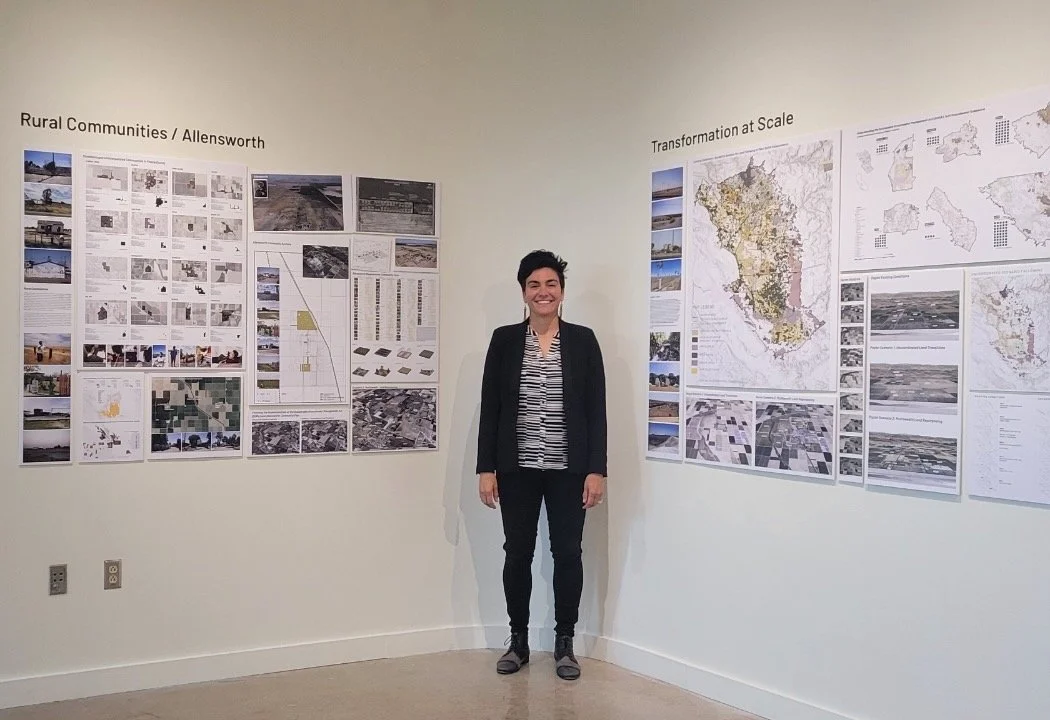
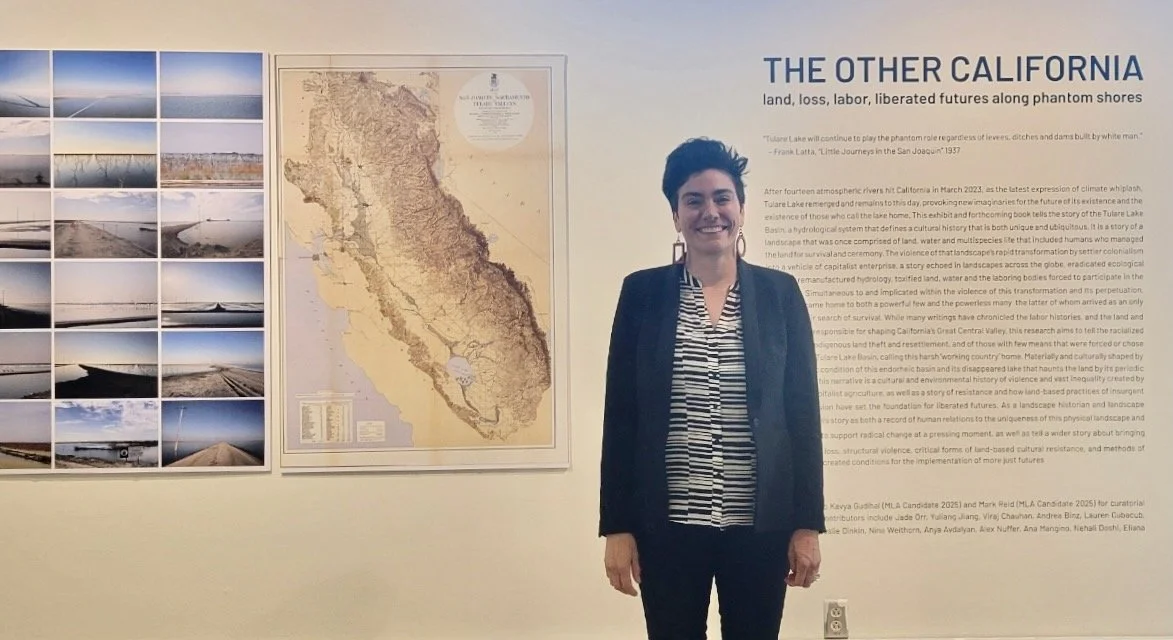
The exhibit and lecture presented foundational work for my forthcoming book “On Phantom Shores”
After multiple atmospheric rivers hit California in March 2023, as the latest expression of climate whiplash, Tulare Lake remerged and remains to this day, provoking new imaginaries for the future of its existence and the existence of those who call the lake home. This exhibit presented the story of the Tulare Lake Basin, a hydrological system that defines a cultural history that is both unique and ubiquitous. It is a story of a landscape that was once comprised of land, water and multispecies life that included humans who managed the land for survival and ceremony. The violence of that landscape’s rapid transformation by settler colonialism into a vehicle of capitalist enterprise, a story echoed in landscapes across the globe, eradicated ecological lifeways, remanufactured hydrology, toxified land, water and the laboring bodies forced to participate in the new order. Simultaneous to and implicated within the violence of this transformation and its perpetuation, the land became home to both a powerful few and the powerless many, the latter of whom arrived as an only option in their search of survival. While many writings have chronicled the labor histories, and the land and water barons responsible for shaping California’s Great Central Valley, this research aims to tell the racialized story of both indigenous land theft and resettlement, and of those with few means that were forced or chose to settle in the Tulare Lake Basin, calling this harsh ‘working country’ home. Materially and culturally shaped by the geographic condition of this endorheic basin and its disappeared lake that haunts the land by its periodic reemergence, this narrative is a cultural and environmental history of violence and vast inequality created by 150-years of capitalist agriculture, as well as a story of resistance and how land-based practices of insurgent cultural expression have set the foundation for liberated futures. As a landscape historian and landscape designer, I tell this story as both a record of human relations to the uniqueness of this physical landscape and a guide on how to support radical change at a pressing moment, as well as tell a wider story about bringing visibility to land loss, structural violence, critical forms of land-based cultural resistance, and methods of repair that have created conditions for the implementation of more just futures.